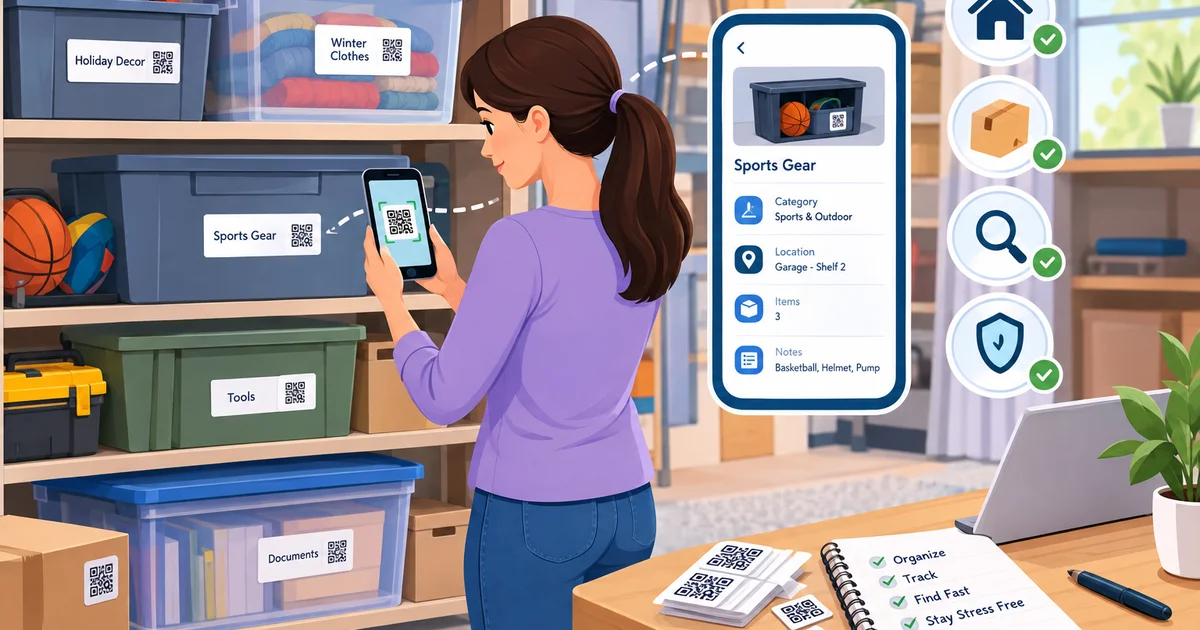
Keeping track of everything stored in your home can become surprisingly difficult. Seasonal decorations, old documents, kitchen equipment, clothing, tools, children’s belongings, and rarely used items often end up in closets, garages, attics, basements, or storage units. Without a reliable system, finding one specific item can mean opening several boxes and searching through piles of belongings.
A well-organized household inventory provides a practical solution. Instead of relying on memory, you can create a clear record of what you own, where it is stored, and how to find it when needed. With modern tools such as digital inventory apps and QR code labels, tracking stored belongings can become faster and much more convenient.
What Is a Household Inventory System?
A household inventory system is an organized method for recording and managing the items you keep at home or in external storage. It can include information such as an item’s name, category, storage location, quantity, and other useful details.
The goal is simple: you should be able to determine where something is without physically searching through every storage container. Whether you have a few storage boxes or an entire garage filled with belongings, an organized system gives you better visibility over your possessions.
A digital system can make this process even easier because information can be updated whenever items are moved, added, removed, or reorganized.
Why Household Tracking Matters
Effective household tracking can save time and reduce unnecessary frustration. People often remember owning an item but cannot remember exactly where they placed it. This problem becomes even more common after moving, seasonal reorganizing, or placing belongings into long-term storage.
Tracking stored items allows you to know what is inside each container before opening it. For example, instead of searching through several boxes for holiday decorations, you can check your inventory and immediately identify the relevant container.
Household tracking can also help prevent duplicate purchases. When you know what you already own, you are less likely to purchase another item simply because you cannot find the original.
How to Start a Home Inventory Tracking System
The first step in home inventory tracking is to divide your belongings into manageable groups. You can organize items according to rooms, categories, storage areas, or container numbers.
Start with areas where items are frequently difficult to locate. Garages, closets, basements, attics, and storage rooms are often good places to begin. Record the contents of each box, bin, drawer, or other storage container.
Your inventory does not need to contain unnecessary information. Focus on details that will actually help you identify and locate an item. A simple description, category, storage location, and container reference may be enough for everyday use.
Once the basic information is recorded, maintain the system as your belongings change. An inventory becomes most useful when it remains accurate over time.
Using QR Code Labels for Stored Items
Traditional handwritten labels can identify a box, but they usually provide only limited information. QR code labels offer a more flexible approach because scanning a code can connect a physical container with digital inventory information.
For example, you could place a QR label on a storage bin containing winter clothing. When you scan the code with a compatible system, you can access information associated with that container instead of opening the bin to determine what is inside.
QR code labels can be particularly useful when you have many similarly sized boxes or containers. Instead of writing lengthy descriptions on every box, the physical label can provide a quick connection to more detailed digital information.
Organize Items by Storage Location
Location is one of the most important parts of an effective household inventory. Knowing that you own something is useful, but knowing exactly where it is stored is much more valuable.
You can organize your inventory by areas such as the garage, bedroom closet, basement, attic, kitchen cabinets, or external storage unit. Within each area, you can identify specific shelves, cabinets, boxes, or bins.
For instance, a record could identify a container as being in the garage on a particular shelving unit. This makes retrieval easier because you know where to begin looking before you even enter the storage area.
Make Your Inventory Easy to Update
A household inventory should not become another complicated organizational task. The best system is one that is simple enough to maintain.
Whenever you place something into storage, add it to the appropriate record. When you remove an item permanently, update the inventory. If an item moves from one box to another, change its location information.
Using a digital system can make these updates more convenient than maintaining a paper notebook. It also reduces the possibility of losing your inventory record itself.
Household Inventory for Moving and Seasonal Storage
A reliable inventory system is especially useful during a move. Packing dozens of boxes can quickly create confusion because containers may look identical once they are sealed.
By assigning each container an identifiable record, you can keep track of its contents throughout the moving process. You can also determine which boxes should be opened first after arriving at your new home.
Seasonal storage is another excellent use case. Instead of searching through every storage container when a new season arrives, you can quickly identify the appropriate boxes containing decorations, clothing, outdoor equipment, or other seasonal belongings.
Improve Organization With Digital Inventory Tools
Digital inventory tools can make household organization more efficient by bringing physical storage and digital information together. Rather than keeping separate notes for different rooms, you can manage information in one centralized system.
When combined with QR code labels, digital inventory tools can create a straightforward connection between your physical belongings and their digital records. Scanning a label can help you access the information associated with a particular container, making retrieval more efficient.
This approach is particularly valuable for households with large storage areas or frequently changing collections of belongings.
Choosing QR Code Labels for Your Home
When selecting QR code labels, consider how durable they need to be and where they will be placed. Labels used on garage containers or storage bins may need to withstand more handling than labels placed inside a clean closet.
It is also important to choose a system that makes inventory information easy to update. A QR label is most useful when the information connected to it remains accurate and accessible.
If you are considering purchasing QR-based organization labels, you can buy Amazon options for basic labeling needs, while specialized smart-label systems may offer additional features designed specifically for digital storage management.
Keep Your Household Inventory Current
Creating an inventory once is helpful, but maintaining it is what makes the system valuable in the long term. Set aside a few minutes whenever you reorganize a storage area or add a significant number of items.
Regular updates prevent outdated information from becoming a problem. If a box originally contained holiday decorations but later receives additional items, update its record so you can still rely on the information when searching for something.
The more accurate your inventory becomes, the less time you need to spend physically searching for stored belongings.
Make Stored Items Easier to Find
A well-designed household inventory can turn disorganized storage into a system that is easier to understand and manage. Instead of depending on memory, you can create a reliable record of what you own and where those belongings are located.
Combining home inventory tracking with digital organization and QR code labels can make the process even more convenient. Whether you are preparing for a move, managing seasonal belongings, organizing a garage, or simply trying to reduce household clutter, a structured inventory system gives you greater control over your stored items.
The key is to start small, organize information around storage locations, label containers clearly, and keep your records updated. With these simple practices, finding stored belongings can become a quick task rather than a frustrating search.