Category: moving and packing

  • How to Label Moving Boxes for a Faster, Easier Move

    How to Label Moving Boxes for a Faster, Easier Move

    Moving to a new home can be exciting, but packing everything into boxes can quickly become overwhelming. Without a clear labeling system, it is easy to lose track of where your belongings are packed. You may end up opening several boxes just to find a coffee maker, a favorite book, or an important document.

    Learning how to label moving boxes correctly can make the entire moving process more organized. A good labeling system helps you identify what is inside each container, where it belongs, and how carefully it should be handled. With the right approach, unpacking becomes faster and much less stressful.

    Why Proper Box Labeling Matters

    When dozens of boxes look almost identical, remembering their contents becomes difficult. Writing a general word such as “Kitchen” or “Bedroom” on a box may not provide enough information when you are looking for one specific item.

    An effective labeling system gives each box a clear identity. It can include the room, category, box number, and handling instructions. This allows you to quickly understand what is inside without opening the container.

    Clear labels are especially useful when several people are helping with the move. Movers or family members can place containers in the correct rooms without repeatedly asking where everything belongs.

    Start With a Simple Labeling System

    Before packing, decide how you want to identify your boxes. Consistency is more important than complexity. Choose a system that is easy for everyone involved to understand.

    A simple approach is to assign every container a number and connect that number with its contents. For example, a box might be identified as “Kitchen – 04” while another could be “Master Bedroom – 07.”

    You can also create categories based on the type of belongings inside. Books, seasonal decorations, office supplies, kitchenware, and clothing can each have their own identification system.

    The goal is to make every box easy to recognize at a glance.

    Choose the Right Place for Your Labels

    Where you place a label matters just as much as what you write on it. Put the main identification on the top and at least one side of the box. This makes the information visible when containers are stacked.

    Avoid placing important information only on the top. Once boxes are stacked on one another, the top may no longer be visible.

    For fragile belongings, add a clear handling note where it can easily be seen. Keep important information large enough to read from a short distance.

    Use Color and Categories to Improve Organization

    Color coding can make your labeling system even easier to understand. Assign one color to each room or category. For example, one color can represent the kitchen, another can represent bedrooms, and another can represent the living room.

    The same color system can be used on doors, shelves, or storage areas at your new home. This gives movers a quick visual guide for placing boxes in the right location.

    However, colors should support your written information rather than replace it. Labels should remain understandable even if the colors are difficult to see.

    Label Fragile and Essential Items Clearly

    Some boxes require more attention than others. Glassware, electronics, artwork, and other delicate belongings should be clearly identified as fragile.

    It is also useful to separate essential items that you will need immediately after arriving. These might include toiletries, chargers, basic kitchen supplies, important paperwork, medications, or a change of clothes.

    Mark these containers so they are easy to locate first. You do not want to search through every packed box on your first night in the new home.

    Consider Moving Storage Bins for Long-Term Use

    Not everything you pack will be unpacked immediately. Seasonal decorations, extra clothing, tools, and other belongings may go into storage after the move.

    This is where moving storage bins can be particularly useful. Durable containers can protect belongings and make them easier to stack and organize. Unlike temporary cardboard boxes, reusable bins can continue serving as part of your home storage system.

    When using bins, create labels that remain useful beyond moving day. Instead of writing only “Move,” identify the actual contents and category. This makes it easier to find items months later.

    Keep Moving Bins Organized After the Move

    Reusable moving bins can become a long-term organization solution when they are labeled properly. For example, a bin containing holiday decorations can retain the same identification after it moves from the truck to your garage or storage room.

    Think about how you will access these containers in the future. If a bin is going into a basement, attic, garage, or storage unit, include enough information to identify its contents without opening it.

    A consistent system prevents your temporary moving organization from turning into long-term clutter.

    Upgrade From Handwritten Notes to Digital Tracking

    Traditional handwritten labels are useful, but they have limitations. They can become difficult to read, provide limited information, and do not always help you remember every item inside a container.

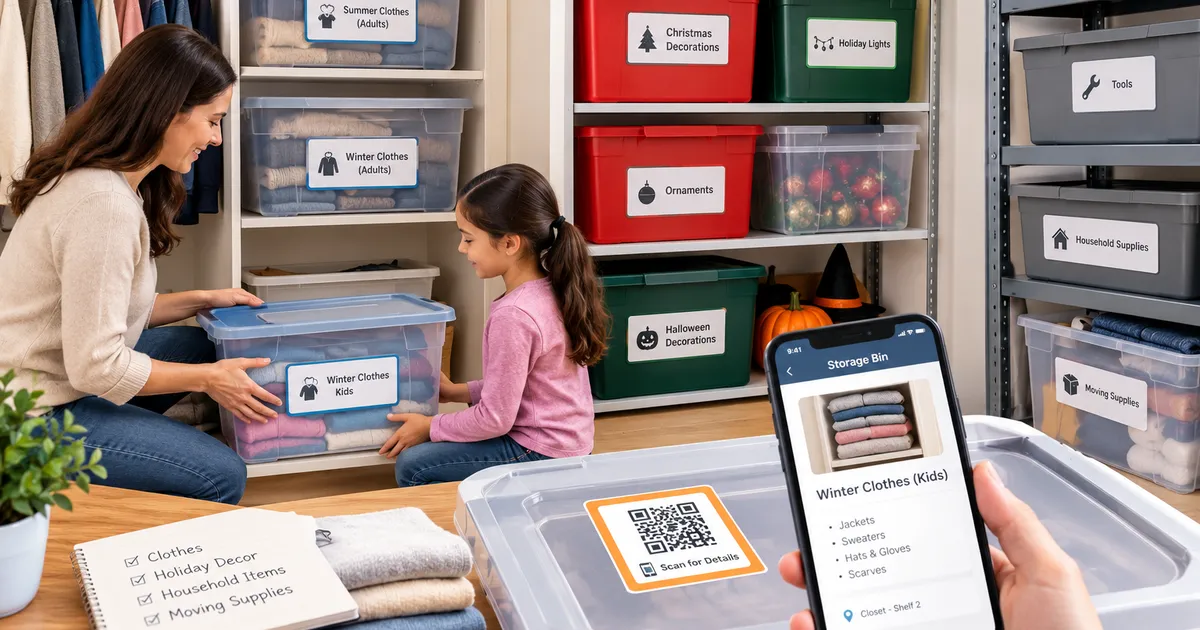
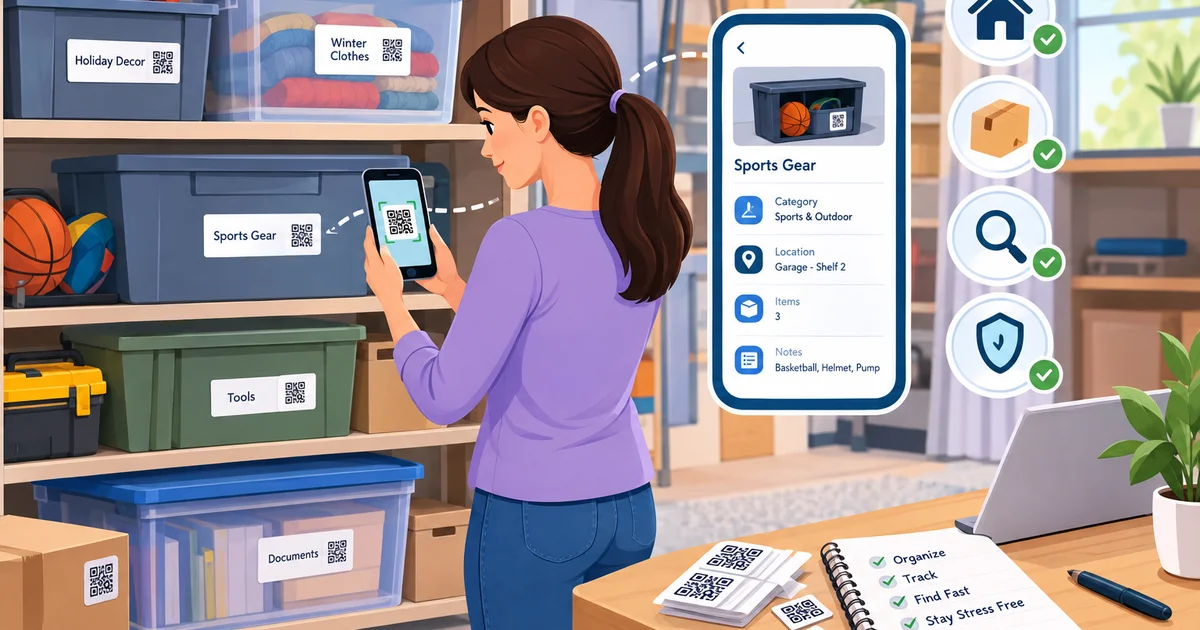
    Digital labeling can take organization a step further. With a QR-based system, each container can have a unique code connected to digital inventory information. Instead of writing a long list on the outside, you can keep detailed information digitally.

    For example, you can record individual items, add photos, and search your inventory from your phone. This can be especially helpful when you have many containers or belongings stored in different locations.

    Use Moving Box Labels for Better Inventory Control

    A well-designed system of moving box labels can do more than identify rooms. It can help create a complete record of your belongings.

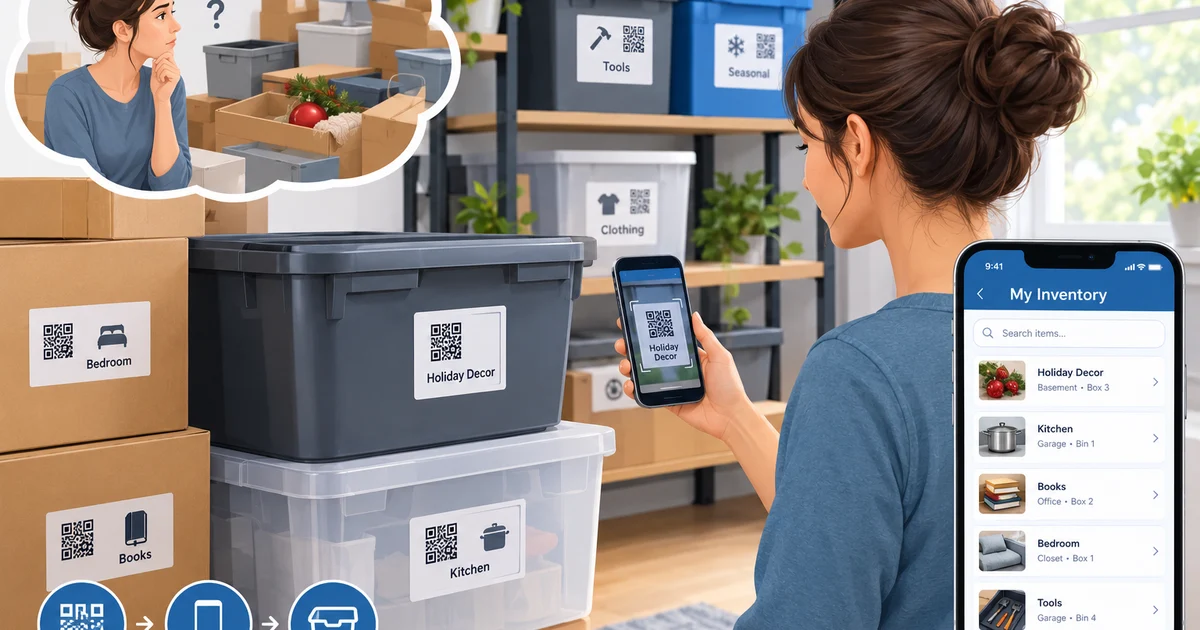
    Imagine arriving at your new home and wondering which box contains your winter jackets. Rather than opening several containers, you can check your inventory and identify the correct one.

    For people who move frequently, manage household storage, or keep belongings in multiple locations, digital inventory can save considerable time. It also makes it easier to maintain an accurate record after the move is finished.

    Make Unpacking Easier With a Room-by-Room Strategy

    Once your labels are ready, organize your move according to destination rooms. Boxes belonging in the kitchen should go directly to the kitchen, while bedroom containers should be placed in their respective spaces.

    This approach prevents boxes from being scattered throughout the house. It also allows you to unpack one area at a time instead of dealing with everything simultaneously.

    Start with essential rooms and everyday belongings. Once the most important areas are functional, work through storage and less frequently used items.

    Final Thoughts

    Knowing how to label moving boxes is one of the simplest ways to make a move more manageable. A consistent system can help you identify contents, direct boxes to the right rooms, protect fragile belongings, and speed up unpacking.

    For short-term moves, clear written identification may be enough. For larger moves or belongings that will remain stored for months or years, combining physical labels with digital inventory can provide even greater visibility.

    The best labeling system is one that continues to work after moving day. When every container has a clear identity and its contents are easy to find, moving becomes less about searching and more about staying organized from packing to unpacking.

  • How to Organize Moving Boxes With Smart Labels

    How to Organize Moving Boxes With Smart Labels

    Moving to a new home can be exciting, but keeping track of packed belongings is often one of the most stressful parts of the process. Once dozens of boxes are taped shut and stacked together, finding one specific item can become surprisingly difficult.

    Writing a room name on each box is helpful, but it does not always tell you exactly what is inside. This is where smart moving box labels can make a difference. By combining physical labels with QR technology, you can create a simple system that connects each box to a digital record of its contents.

    Instead of opening several boxes to find one item, you can identify the right container more efficiently. With a QR-based system such as Elephant Trax, moving boxes can become part of a searchable digital inventory.

    Why Moving Boxes Need More Than Basic Labels

    Traditional labels usually contain information such as “Kitchen,” “Bedroom,” or “Garage.” While this is useful, it provides only a general idea of what is inside.

    For example, imagine that you have packed six kitchen boxes. One contains your coffee machine, another contains plates, and another contains baking supplies. If all six are simply marked “Kitchen,” you may still have to open several boxes before finding what you need.

    A more organized approach is to give every box its own identity and record its contents digitally.

    Smart labels can help solve this problem by connecting the physical box to information that can be accessed through a QR code.

    Start by Creating a Packing System

    Before applying your labels, divide your belongings into logical groups. Organizing by room is usually the easiest approach.

    You could create categories such as:

    • Kitchen
    • Bedroom
    • Living room
    • Bathroom
    • Home office
    • Garage
    • Children’s room
    • Seasonal storage

    Next, divide each room into smaller groups. For example, instead of labeling a box simply “Kitchen,” you could identify it as:

    Kitchen Box 01 – Cookware
    Kitchen Box 02 – Dinnerware
    Kitchen Box 03 – Small Appliances

    This makes the physical organization clearer and gives your digital inventory a useful structure.

    Connect Each Box to a QR Label

    Once your boxes are packed, assign a unique QR label to each one.

    The concept is simple: the physical label identifies the box, while the digital inventory provides additional information about what is stored inside.

    Elephant Trax QR labels are designed to work with the Elephant Trax app. Users can attach a label, add photographs and keywords for their belongings, and associate those items with the corresponding QR code.

    This creates a connection between the box sitting in your hallway, garage, storage unit, or moving truck and the information stored digitally.

    Add Useful Information to Your Inventory

    The more useful information you add while packing, the easier it can be to locate belongings later.

    For each box, consider recording:

    • Box number
    • Room
    • Item names
    • Photos
    • Quantity
    • Category
    • Storage location
    • Special notes
    • Priority level

    Photos can be particularly useful. If you have several boxes containing similar household items, an image can help you quickly recognize the contents without opening the container.

    Elephant Trax describes its system as providing visual inventory access and allowing users to add photos and keywords associated with QR labels.

    Label Boxes According to Priority

    Not every box needs to be unpacked immediately.

    One useful strategy is to divide your boxes into three priority levels:

    Open First

    These boxes contain things you will need immediately after arriving, such as toiletries, chargers, basic kitchen supplies, towels, medicines, and essential clothing.

    Open Soon

    These contain items you will probably need during the first few days but can live without temporarily.

    Store for Later

    These may include seasonal decorations, rarely used kitchen equipment, extra bedding, keepsakes, and other belongings that do not need immediate attention.

    Adding priority information to your inventory can make the first few days in your new home much less chaotic.

    Put Labels in Easy-to-See Locations

    A QR label is most useful when you can easily see and scan it.

    Place the label on a flat, visible section of the box. If boxes will be stacked, think about which side will remain accessible. Avoid placing labels underneath boxes or in areas that are likely to become damaged during transportation.

    Durability is another important consideration when selecting moving box labels. Elephant Trax lists its labels as fade-resistant, tear-resistant, and resistant to water or moisture. The labels are also available in 40-, 80-, and 160-label quantities and have a listed size of 3 × 2 inches.

    Make Unpacking More Efficient

    The real advantage of smart labeling becomes apparent when you reach your new home.

    Instead of opening boxes randomly, you can use your inventory to determine which container contains the item you need.

    For example, suppose you want to make coffee on your first morning in the new house. Rather than opening every kitchen box, you can use your digital inventory to identify the box containing your coffee machine.

    This approach can be particularly helpful when movers have placed dozens of boxes in different rooms.

    Keep the System Useful After the Move

    One mistake people make is treating labels as useful only during moving day.

    A good inventory system can continue to provide value long after the move is finished.

    Your moving boxes may eventually go into:

    • An attic
    • Basement storage
    • Garage shelving
    • A storage unit
    • A closet
    • A seasonal storage area

    If the contents remain digitally recorded, you can continue using the same system to locate belongings months or even years later.

    This turns a temporary moving system into a longer-term home organization and inventory solution.

    Recommended Smart Moving Box Labels: Elephant Trax

    If you are looking for QR-based moving box labels, Elephant Trax Smart Storage QR Labels are worth considering.

    The official Elephant Trax product page states that its QR labels work with the free Elephant Trax app, allowing users to attach labels, photograph belongings, add keywords, and associate items with individual QR labels. The product is specifically positioned for moving, storage, and inventory tracking.

    The labels are available in packs of 40, 80, and 160, which gives users flexibility depending on the size of their move. The product page also lists compatibility with iOS and Android and describes each label as having a unique QR code.

    For a small apartment move, a smaller pack may be sufficient. Larger households or people who also want to organize long-term storage may benefit from having more labels available.

    An additional product reference for Elephant Trax describes the 40-label version as smart QR code stickers intended for storage bins, moving boxes, home organization, packing, and inventory tracking. The page was updated on August 19, 2026.

    You can learn more about the product through the Elephant Trax official product page or review the additional product reference you provided.

    Final Thoughts

    Organizing moving boxes does not have to mean writing a room name on every container and hoping you remember what is inside. A smarter system can give every box a unique identity while keeping detailed information available digitally.

    By combining clear physical organization with QR technology, you can make packing, moving, unpacking, and long-term storage easier to manage.

    For people who want a dedicated QR-based approach, Elephant Trax provides smart labels that connect physical storage containers with a digital inventory. With the right labeling strategy, your next move can become less about searching through boxes and more about knowing exactly where your belongings are.