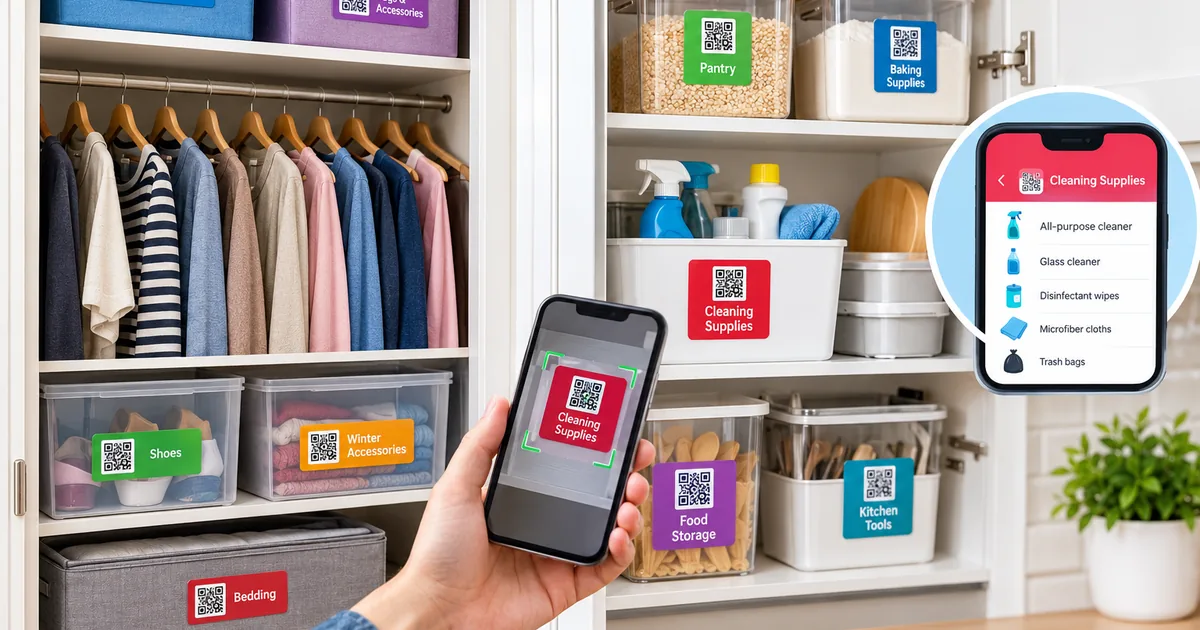
Closets and cabinets can quickly become cluttered when clothes, accessories, kitchen supplies, cleaning products, and household essentials do not have designated places. Finding a particular item often means moving several things around or opening multiple storage containers. Traditional labels can help, but they may not provide enough information about everything stored inside a box or bin.
QR code stickers offer a smarter way to organize closets and cabinets by connecting physical storage containers with digital item information. With a simple scan, you can identify stored belongings, maintain an inventory, and make everyday organization easier. By combining QR labels with a practical storage system, you can create a home where everything has its place.
1. Start by Decluttering Your Closets and Cabinets
Before applying QR labels, remove everything from the closet or cabinet you want to organize. Sort the contents into categories such as items you use regularly, seasonal belongings, accessories, cleaning supplies, and things you no longer need.
Donate, recycle, or discard items that are no longer useful. Reducing unnecessary belongings creates more space and makes it easier to maintain an organized system.
Once you have sorted everything, decide where each category belongs. Keep frequently used items within easy reach and place occasional-use belongings on higher shelves or in labeled storage containers.
2. Group Similar Items Together
Grouping similar belongings is one of the simplest ways to improve closet and cabinet organization. Instead of placing everything wherever space is available, create specific zones for different categories.
For example, a bedroom closet can have separate areas for seasonal clothing, shoes, bags, accessories, and extra bedding. Kitchen cabinets can be organized around baking supplies, cooking utensils, food storage containers, and rarely used appliances.
Use storage bins or boxes to keep smaller items together. Applying QR code stickers to these containers makes it easier to identify their contents without removing everything from the shelf.
A consistent system also helps family members return items to the correct location after use.
3. Use QR Code Stickers for Better Storage Management
Traditional labels usually display a short description, such as “Winter Clothes” or “Kitchen Supplies.” While useful, they cannot always provide a detailed list of everything inside a container.
QR code stickers can support a more detailed digital inventory. Depending on the compatible QR labeling system, you can scan a code to access information associated with a storage box, bin, or other organized space.
For example, a container labeled “Winter Accessories” might hold scarves, gloves, hats, and thermal clothing. Instead of opening the box to check its contents, you can consult the associated digital record.
This approach is especially helpful for high shelves, deep cabinets, storage closets, and containers used only a few times each year.
When setting up your system, make sure each QR code is associated with the correct container and its contents. Keep the information updated whenever you add, remove, or relocate belongings.
4. Organize Different Spaces With Colored QR Labels
Color coding adds another layer of organization to closets and cabinets. Different colors can represent particular categories, rooms, or storage purposes, helping you recognize the right container more quickly.
For example, you might use blue labels for bedroom storage, green labels for kitchen supplies, orange labels for seasonal decorations, and red labels for important household items.
Choose a color system that makes sense for your home and apply it consistently. You can also use colors to distinguish frequently accessed containers from long-term storage.
Colored QR code stickers combine visual identification with digital organization. The color helps you recognize a category at a glance, while the QR code can provide access to more detailed information.
Avoid assigning too many colors at once. A simple, consistent color scheme is generally easier to remember and maintain.
5. Make the Most of Vertical and Hidden Storage
Closets and cabinets often have unused space on upper shelves, in deep corners, or beneath hanging clothes. Storage bins can help you make better use of these areas without allowing belongings to become scattered.
Store seasonal clothes, spare linens, holiday accessories, and occasional-use household items in suitable containers. Place QR labels where they remain visible and easy to scan.
For containers stored on high shelves, position the labels on the front or another accessible surface. This reduces the need to remove multiple boxes just to identify one item.
You can also use QR labels on drawers, cabinet doors, and storage organizers when the system supports identifying those locations. This makes it easier to establish a consistent organization method throughout your home.
6. Create a Digital Inventory and Keep It Updated
A successful organization system should help you find items and remember where they belong. Create a digital record for each labeled container with a clear name and an accurate list of its contents.
For example, a cabinet storage record might include spare batteries, charging cables, extension cords, and small electronic accessories. A linen closet record might list guest towels, extra pillowcases, and spare bedsheets.
Use descriptive names instead of general labels such as “Miscellaneous.” Specific information makes searching more useful.
Whenever you move items to another container, update the corresponding record. Review your inventory during seasonal cleaning or whenever you reorganize a closet or cabinet.
This simple habit prevents your digital inventory from becoming outdated and keeps your storage system useful over time.
7. Maintain Your QR Labeling System
Once your closets and cabinets are organized, regular maintenance will help prevent clutter from returning. Return belongings to their designated spaces after use, remove unnecessary items periodically, and check that every label remains readable.
Place QR code stickers on clean, dry, and suitable surfaces. Follow the label manufacturer’s instructions for application, especially on plastic bins or surfaces exposed to moisture. Test each code after applying it to ensure it scans correctly.
If a container’s contents change, update the associated digital information. Replace damaged labels when necessary and keep your color categories consistent.
These small steps make QR labeling a practical long-term organization method rather than a one-time decluttering project.
Conclusion
Organizing closets and cabinets becomes easier when you combine decluttering, categorized storage, color coding, and digital inventory management. QR code stickers help connect physical containers with useful item information, while colored labels make different storage categories easier to recognize.
For homeowners looking to simplify storage management, Elephant Trax QR labels offer a smart option to explore for organizing boxes, bins, and other storage spaces. Its QR-based approach, combined with colored labeling options, can help you build a more searchable and visually organized storage system. By using Elephant Trax QR labels consistently, you can make everyday home organization more convenient and spend less time searching for the things you need.
Leave a Reply