Storage areas can quickly become difficult to manage. Boxes get stacked on top of one another, seasonal belongings disappear behind unused items, and finding one small object can turn into a long search. Good organization is not only about making a space look neat. It is about creating a system that helps you find what you need quickly.
With a practical Home Organization system, clear categories, and modern labeling methods, you can turn a crowded storage area into an easy-to-manage space.
Start by Sorting Everything
Before organizing your storage, take everything out and sort it into groups. Avoid simply moving boxes from one place to another because this can keep the same clutter problem in a different arrangement.
Create categories based on how you use your belongings. For example, you might have separate groups for holiday decorations, clothing, documents, children’s items, tools, kitchen supplies, and household accessories.
At the same time, separate things you no longer need. Items that are broken, unused, or no longer suitable for your household may be donated, recycled, or discarded.
This first step reduces the number of items you need to store and makes the rest of the organization process much easier.
Choose Storage Containers Carefully
Once everything is sorted, select containers that fit the items and the available space. Matching storage bins can make a storage room look cleaner, but functionality should come first.
Use smaller containers for loose or frequently accessed items and larger bins for seasonal belongings. Transparent containers can also be useful because you can see their contents without opening them.
However, even transparent bins can become difficult to identify when they are stacked together. This is where an effective labeling system becomes valuable.
Create a Simple Naming System
A good storage system needs consistent names. Instead of writing vague labels such as “Stuff” or “Miscellaneous,” use specific descriptions.
For example, a bin could be labeled:
- Winter Decorations
- Summer Clothes
- Camping Equipment
- Important Documents
- Children’s Toys
The goal is to make the label immediately understandable. Anyone in the household should be able to look at a container and know what it contains.
You can also assign storage locations to different categories. For example, seasonal items can stay on higher shelves while frequently used belongings remain within easy reach.
Use Smart Labels for Faster Searches
Traditional handwritten labels can help, but they provide limited information. Smart labels can make storage management more convenient by connecting physical containers with digital information.
Instead of opening several boxes to determine where an item is located, a digital labeling system can help you identify and track stored belongings more efficiently.
This approach can be particularly useful when you have many storage bins, move frequently, or keep items in garages, attics, closets, basements, or storage units.
The key advantage is that your organization system does not depend entirely on remembering where everything was placed.
Consider QR Labels for Storage Bins
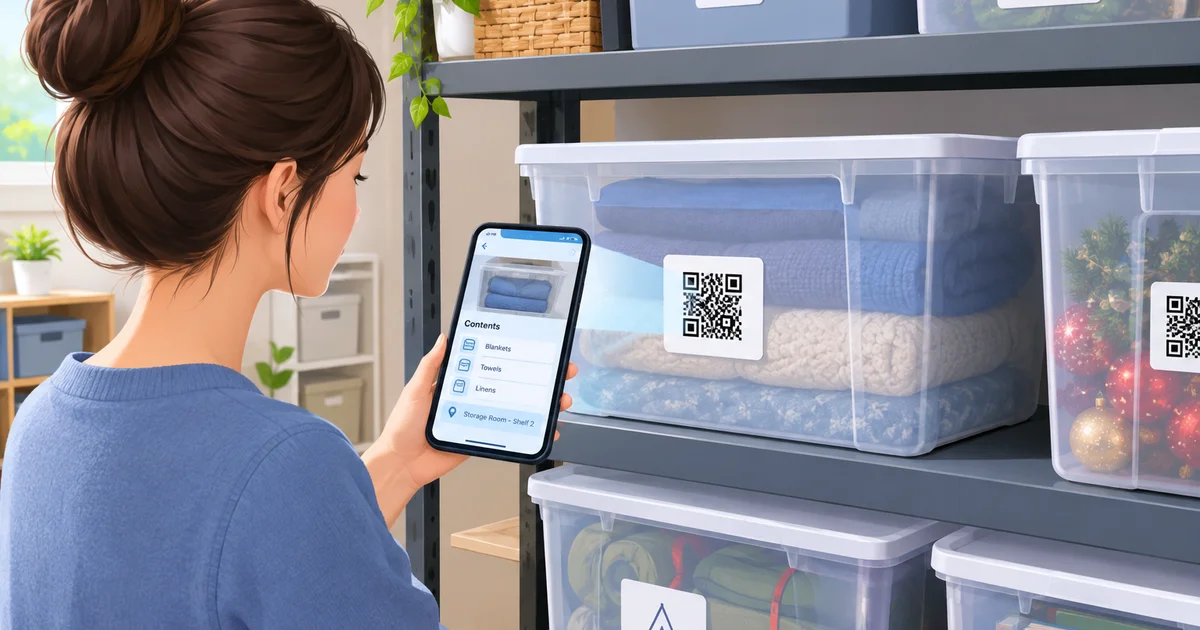
For larger storage collections, QR Labels for Storage Bins can provide another level of organization. A QR code attached to a bin can connect the physical container to information about its contents.
For example, instead of opening five similar boxes looking for holiday decorations, you can scan the appropriate label and check the information associated with that container.
A useful digital record might include the bin’s category, a list of major items inside, its storage location, and notes about when the contents are normally needed.
This can make the process of locating stored belongings considerably faster.
Organize According to Frequency of Use
Not everything in storage needs to be equally accessible. Think about how frequently you use each category.
Items you need regularly should be placed at the front or on lower shelves. Seasonal and rarely used belongings can go toward the back or higher up.
For example, holiday decorations may only be needed once or twice a year, while cleaning supplies or household equipment might be accessed every few weeks.
Organizing based on frequency prevents you from repeatedly moving multiple containers just to reach one frequently used item.
Keep a Digital Inventory
A digital inventory can be especially useful when your storage collection grows. Record the important items in each container and associate them with their corresponding label.
You do not necessarily need to document every small object. Focus on items that are valuable, important, difficult to replace, or easy to forget.
A digital inventory also helps when someone else needs to find something. Rather than explaining where an item might be, you can use the system to identify its container and location.
Leave Clear Paths and Accessible Spaces
Organization is not only about containers and labels. The physical layout of your storage area matters too.
Avoid creating unstable piles or blocking access to important areas. Leave enough space to remove containers safely and inspect labels.
If bins are stacked, place labels where they can still be easily scanned or read. Shelving can also help maximize vertical space while keeping containers separated and accessible.
A well-planned layout reduces unnecessary searching and makes it easier to maintain the system over time.
Update Your Storage System Regularly
Even the best organization system can become ineffective if it is never updated. Whenever you move something to another bin, remove an item permanently, or add a significant new item, update your records.
Set aside a few minutes every few months to check your storage areas. This prevents small changes from eventually turning into a completely disorganized system.
The goal is not perfection. The goal is to create a system that remains useful as your household changes.
Make Storage Easier With a Smarter System
Searching through unmarked boxes wastes time and often creates unnecessary frustration. A combination of categorized containers, consistent naming, accessible placement, and digital tracking can make storage much easier to manage.
For households with many boxes and containers, smart labeling technology can take this organization a step further. QR Labels for Storage Bins can connect physical storage with digital information, helping you identify where belongings are stored without repeatedly opening every container.
With the right Home Organization strategy, your storage area can become more than a place to hide unused belongings. It can become a searchable, organized system where you can quickly locate the things you need.