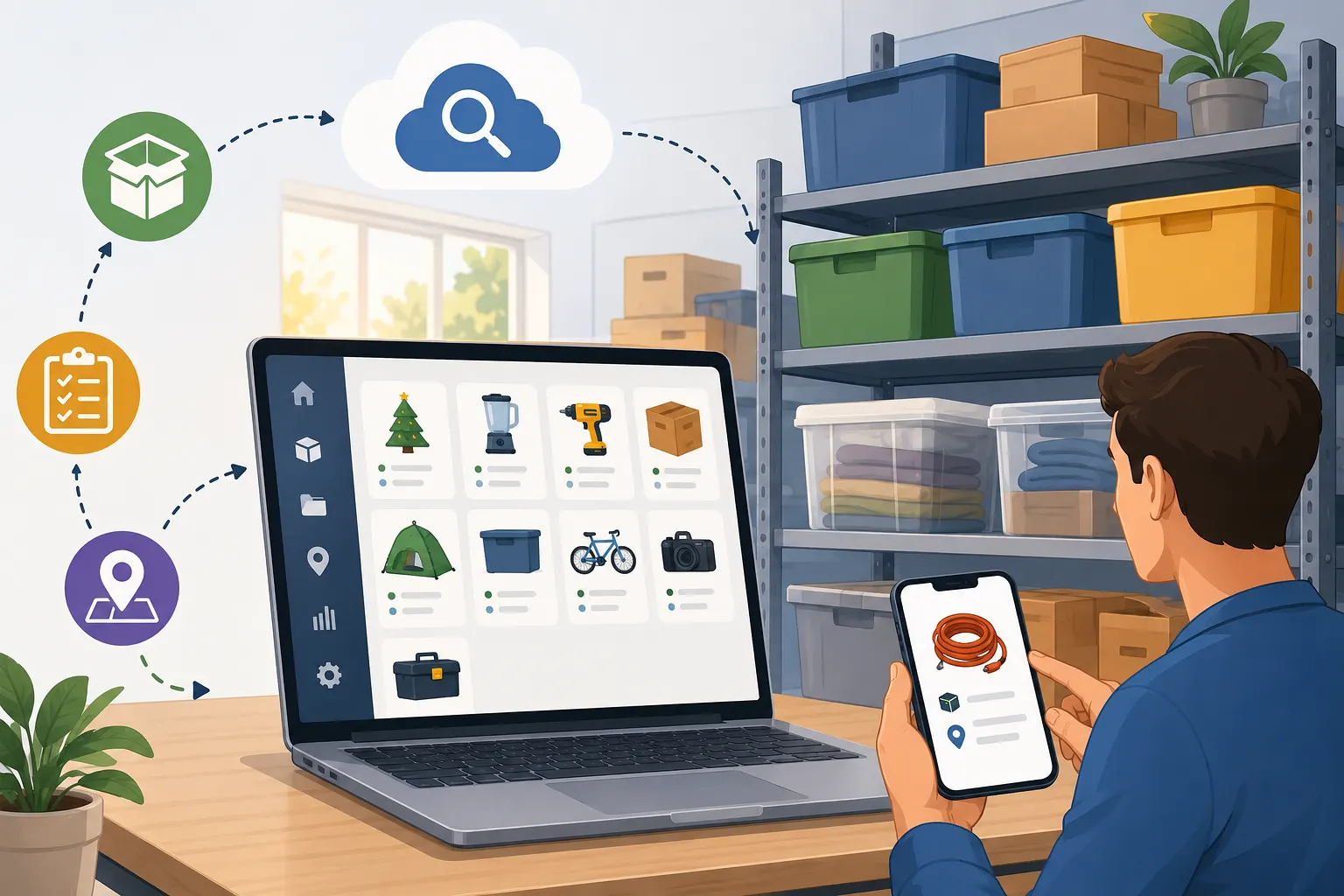
Finding something in storage should not feel like searching for a needle in a haystack. Whether you have boxes in an attic, seasonal decorations in a garage, documents in a closet, or household belongings packed away after a move, poor organization can make simple searches frustrating and time-consuming.
A well-planned inventory organizer can change the way you manage stored belongings. Instead of opening multiple boxes or moving everything around to locate one item, you can create a clear system that tells you what is stored, where it is located, and how to access it quickly. With the right approach, storage becomes easier to manage and much less stressful.
Why Finding Stored Items Can Be Difficult
Storage areas often become disorganized gradually. You may begin with carefully labeled boxes, but over time, new belongings are added, boxes are moved, and labels become less useful. Eventually, you may remember that an item is “somewhere in the garage” without knowing exactly where.
This problem becomes even greater when boxes contain mixed belongings. A single container might hold holiday decorations, old photographs, spare household supplies, and children’s items. Without a reliable system, finding one specific object can require opening several containers.
Poor visibility also creates another problem: people sometimes buy items they already own simply because they cannot remember where their existing supplies are stored. Better organization provides a simple solution by creating a clear record of your belongings.
What Is an Inventory Organizer?
An inventory organizer is a system or tool used to record, categorize, and locate physical belongings. It can be as simple as a structured spreadsheet or as advanced as a digital system that connects stored items with labels and locations.
The main purpose is visibility. Instead of depending entirely on memory, you maintain useful information about your storage.
For example, a record might include:
- The name of the item
- The box or container holding it
- The storage area
- A category
- A short description
- The date it was stored
- Additional notes when necessary
When these details are maintained consistently, you can identify an item’s location before physically searching through your storage space.
Create a Clear Storage Location System
One of the most effective ways to speed up searches is to give every storage area a defined location.
Rather than simply labeling an area “garage,” divide it into practical sections. You might have shelves for seasonal decorations, cabinets for tools, and a designated area for moving boxes. Within each section, containers can have their own identifiers.
For example:
Garage → Shelf A → Box 04 → Winter Decorations
This structure gives you several levels of information. If you need a specific decoration, you know which part of the garage to check instead of searching the entire room.
The same method can work in closets, basements, attics, storage units, and spare rooms.
Use Consistent Labels on Every Container
Labels are one of the simplest tools for improving storage visibility. However, labels are most useful when they follow a consistent format.
Instead of writing vague descriptions such as “Stuff” or “Miscellaneous,” use meaningful names. A box containing kitchen equipment could be labeled “Kitchen Appliances,” while another could be marked “Holiday Tableware.”
You can also assign numbers or codes to containers. This makes it easier to connect the physical box with your digital record.
The goal is to make every container identifiable at a glance. Someone else in your household should also be able to understand the system without needing an explanation.
Make Inventory Tracking Part of Your Routine
Good inventory tracking is not only about creating a list once. Stored belongings change over time. Items are removed, new possessions are added, and containers may be relocated.
If your records are not updated, they can quickly become inaccurate.
A simple routine can prevent this. Whenever you place something into long-term storage, record it immediately. If you remove an item, update its status. When a box is moved to another location, change its recorded position.
This habit requires only a small amount of effort but can save considerable time later.
Group Similar Items Together
Categorization can make searches much faster. Instead of storing items randomly, group belongings according to how they are used.
Common categories might include:
- Seasonal decorations
- Clothing
- Kitchen equipment
- Important documents
- Children’s belongings
- Tools
- Electronics
- Travel accessories
- Hobby supplies
Categorization allows you to narrow down a search before you even enter the storage area.
For example, if you need camping equipment, you can look for the relevant category rather than checking boxes throughout the house. This reduces unnecessary searching and keeps frequently requested items easier to access.
Record the Exact Location of Important Items
Knowing what you own is useful, but knowing where it is stored is even more valuable.
A detailed record should ideally identify the item’s container and physical location. For larger storage spaces, you can go further by recording shelf numbers, cabinet sections, or storage zones.
Consider the difference between these two records:
Basic:
“Christmas lights — garage.”
Detailed:
“Christmas lights — Garage, Shelf B, Container 06.”
The second description provides a direct route to the item. This level of detail becomes especially useful when a storage area contains dozens or hundreds of containers.
Consider Digital Search Options
A digital storage system can make searching even more convenient. Instead of manually checking a paper list, you can search for an item’s name, category, or container identifier.
This becomes particularly helpful when managing a large household inventory. You can search before going to the storage area and determine which box you need.
For example, searching for “extension cords” could show the associated container and location. You can then go directly to that area instead of checking multiple boxes.
Digital records can also be easier to update than handwritten lists, especially when your storage arrangements change regularly.
Make Frequently Used Items Easier to Access
Not every stored item needs to be treated the same way. Items you use regularly should be placed in locations that are easier to reach, while belongings used only once or twice a year can occupy less accessible spaces.
For instance, winter clothing may need to be accessible during colder months, while holiday decorations can remain farther back for most of the year.
An organized storage system should reflect these usage patterns. This prevents you from repeatedly moving heavy boxes just to reach something you use often.
Reduce Duplicate Purchases
One hidden advantage of organized storage is better awareness of what you already own.
People often purchase duplicates because they cannot remember whether an item is already stored somewhere. This can happen with household supplies, tools, decorations, office materials, and other possessions.
A reliable record gives you a quick way to check before buying something new. If you discover that you already have three suitable extension cords or several boxes of decorations, you can avoid unnecessary purchases.
This can also help reduce clutter because fewer duplicate items enter your home.
Make Moving and Decluttering Easier
An organized storage system is especially valuable during a move or major decluttering project. When boxes are clearly identified and their contents are recorded, packing and unpacking become more manageable.
You can also determine which belongings are worth keeping, donating, selling, or discarding. Instead of opening every container to remember what is inside, you can review your records first.
After moving, the same system can help you locate belongings without having to unpack everything immediately.
Keep the System Simple
The best organizational system is one that you will actually maintain. Avoid creating complicated categories or recording unnecessary information that takes too much time.
Start with the essentials: item name, container, category, and location. Once the basic structure works, you can add more information if it provides genuine value.
Consistency matters more than complexity. A simple system that stays updated is far more useful than an elaborate one that becomes outdated after a few weeks.
Final Thoughts
Finding stored belongings quickly depends on visibility, clear labeling, logical locations, and regularly updated records. An inventory organizer brings these elements together by giving you a structured way to understand what you own and where it is kept.
Effective inventory tracking can turn a crowded storage area into a manageable system. Instead of relying on memory or opening box after box, you can identify the right container and go directly to it.
Whether you are organizing a small closet or managing an entire garage, creating a reliable storage system can save time, reduce frustration, prevent unnecessary purchases, and make your home easier to manage. The key is to start with a simple structure, label everything clearly, and keep your records updated as your belongings change.