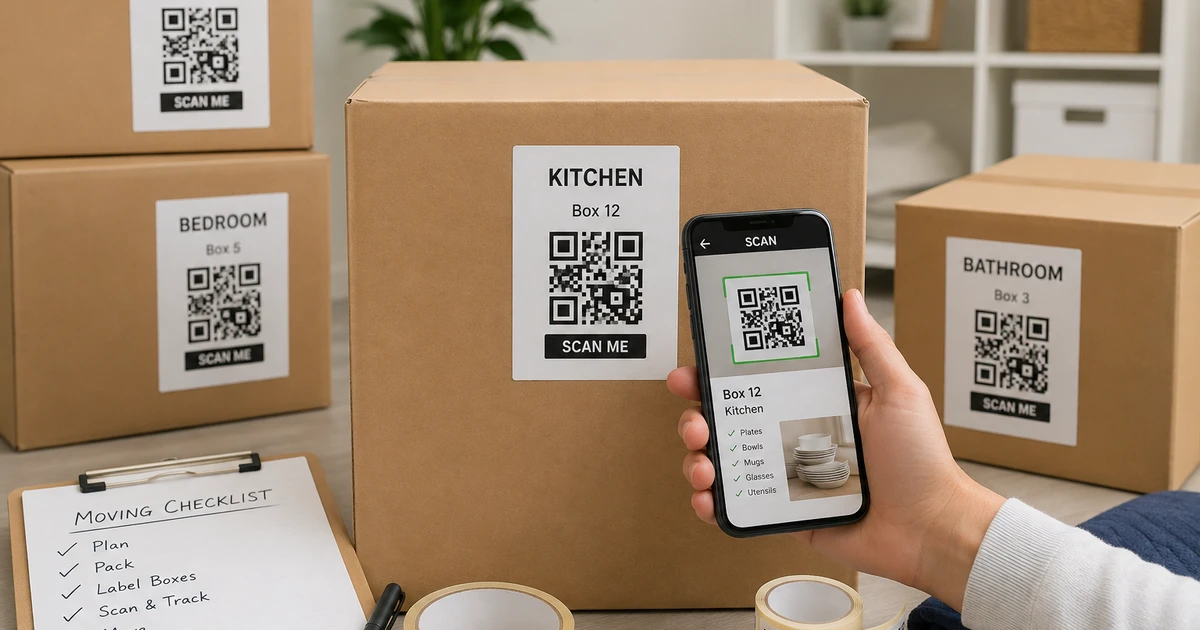
Moving can feel overwhelming, especially when your home is suddenly filled with boxes. Packing is only half the challenge—the bigger problem often begins when it is time to unpack and find something you need.
A simple labeling system can make a major difference. Instead of relying only on handwritten descriptions, QR code stickers can connect each box to a digital record of its contents. This gives you a clearer way to organize belongings before, during, and after a move.
The goal is not to create a complicated system. It is to make your belongings easier to identify, locate, and manage.
Why Smart Labels Can Make Moving Easier
A box marked “Kitchen” may tell you where it belongs, but it does not necessarily tell you what is inside.
You may have several kitchen boxes containing cookware, dishes, appliances, pantry supplies, and small utensils. Once those boxes are stacked together, finding one specific item can mean opening multiple containers.
QR labeling adds another layer of information. Each sticker can be connected to a digital record containing details such as item names, photos, categories, and notes.
This approach follows a basic organizing principle: everything should have a clear place and an easy way to be found.
Create a Simple System Before You Pack
Before applying stickers, decide how you want to organize your boxes.
Start with broad categories based on rooms:
- Kitchen
- Bedroom
- Bathroom
- Living room
- Home office
- Garage
- Storage
- Children’s room
Then create smaller categories within each room.
For example, instead of writing only “Kitchen,” use descriptions such as:
- Kitchen – Cookware
- Kitchen – Dinnerware
- Kitchen – Small Appliances
- Kitchen – Baking Supplies
This makes the physical box easier to identify while also giving your digital inventory a logical structure.
Label Moving Boxes With More Than Just a Room Name
A useful label should answer at least two questions: Where does this box belong? What is inside it?
You can add a box number, room name, category, and priority level. For example:
Box 12 – Kitchen – Coffee & Breakfast Items – Open First
A QR sticker can then provide additional information that would be difficult to fit on the outside of the box.
You can record photographs, item descriptions, quantities, and notes digitally. That means the outside of the box stays simple while the detailed information remains accessible from your phone.
Use QR Code Stickers to Build a Digital Inventory
Once a box is packed, attach its unique QR sticker to a visible area.
The QR code becomes the connection between the physical container and your digital inventory. When you scan it, you can check the information associated with that particular box rather than opening it to see what is inside.
This can be especially useful when boxes are stored in a garage, basement, attic, storage unit, or moving truck.
For larger moves, it also reduces the need to remember which box contains every individual item.
Recommendation: Consider Elephant Trax
If you want to take this approach beyond traditional labels, Elephant Trax is one option worth considering. Its QR-based inventory system is designed to connect physical storage containers with digital information. You can add photos and item details, then associate them with QR labels so you can check your belongings from your phone.
This can be particularly helpful during a move because the same labels can remain useful after you arrive at your new home. Instead of creating a completely new organization method for long-term storage, you can continue using the inventory you’ve already created.
Elephant Trax also positions its system for moving and storage, making it suitable for people who want to combine physical labeling with digital tracking.
Add Photos While You Pack
Photos can make a digital inventory much more useful.
Before closing a box, take a quick picture of its contents. You do not need professional photographs. A simple photo can help you recognize the general contents later.
For example, if you are looking for a particular kitchen appliance, you can check your inventory instead of opening several similarly labeled boxes.
Photos are also useful for fragile or valuable belongings because they provide a visual record of what was packed.
Create an “Open First” Category
Not every box needs the same priority.
Create a separate group for items you will need immediately after arriving. These might include:
- Toiletries
- Towels
- Chargers
- Basic cooking supplies
- Coffee or tea
- Important documents
- Basic clothing
- Cleaning supplies
- Essential tools
Clearly identifying these boxes can prevent the common situation where important everyday items end up buried underneath boxes that can wait.
Make Your Labels Easy to Scan
Placement matters just as much as the label itself.
Put the QR sticker somewhere visible and easy to reach. If boxes will be stacked, consider placing a sticker on both the top and side when appropriate.
Avoid locations that are likely to be covered by packing tape, damaged during transportation, or hidden underneath another box.
The objective is simple: when you need information, you should be able to scan the code without moving half the stack.
Keep Your Organization System After the Move
One of the biggest benefits of using a digital inventory is that it does not have to end when the move is complete.
Your boxes may eventually move from the living room into a garage or storage area. Seasonal decorations may remain packed for months. Extra household items may stay in storage until you need them.
A good organization system should continue working as your storage changes.
This is where organization systems for home can become more useful than one-time decluttering. The focus shifts from simply making a space look tidy to creating a system that helps you find and return things easily.
You can also update the digital record when a box is opened, items are removed, or its location changes.
Think Beyond Moving Day
A smart labeling method can help with more than unpacking.
Once your belongings are digitally organized, you can use the same approach for:
- Seasonal storage
- Garage organization
- Holiday decorations
- Keepsake boxes
- Children’s belongings
- Home office supplies
- Important household items
Instead of creating separate systems for every storage area, you can build one consistent method that works throughout your home.
Final Thoughts
A successful move is not just about getting everything from one house to another. It is about being able to find your belongings once they arrive.
Simple descriptions, clear categories, photographs, and QR technology can turn a collection of anonymous boxes into a system that is much easier to manage.
The best approach is one that remains useful after moving day. By connecting physical containers with digital information, you can spend less time searching through boxes and more time settling into your new home.
For anyone looking to make moving and long-term storage easier, QR-based labeling offers a practical step toward a more organized home.