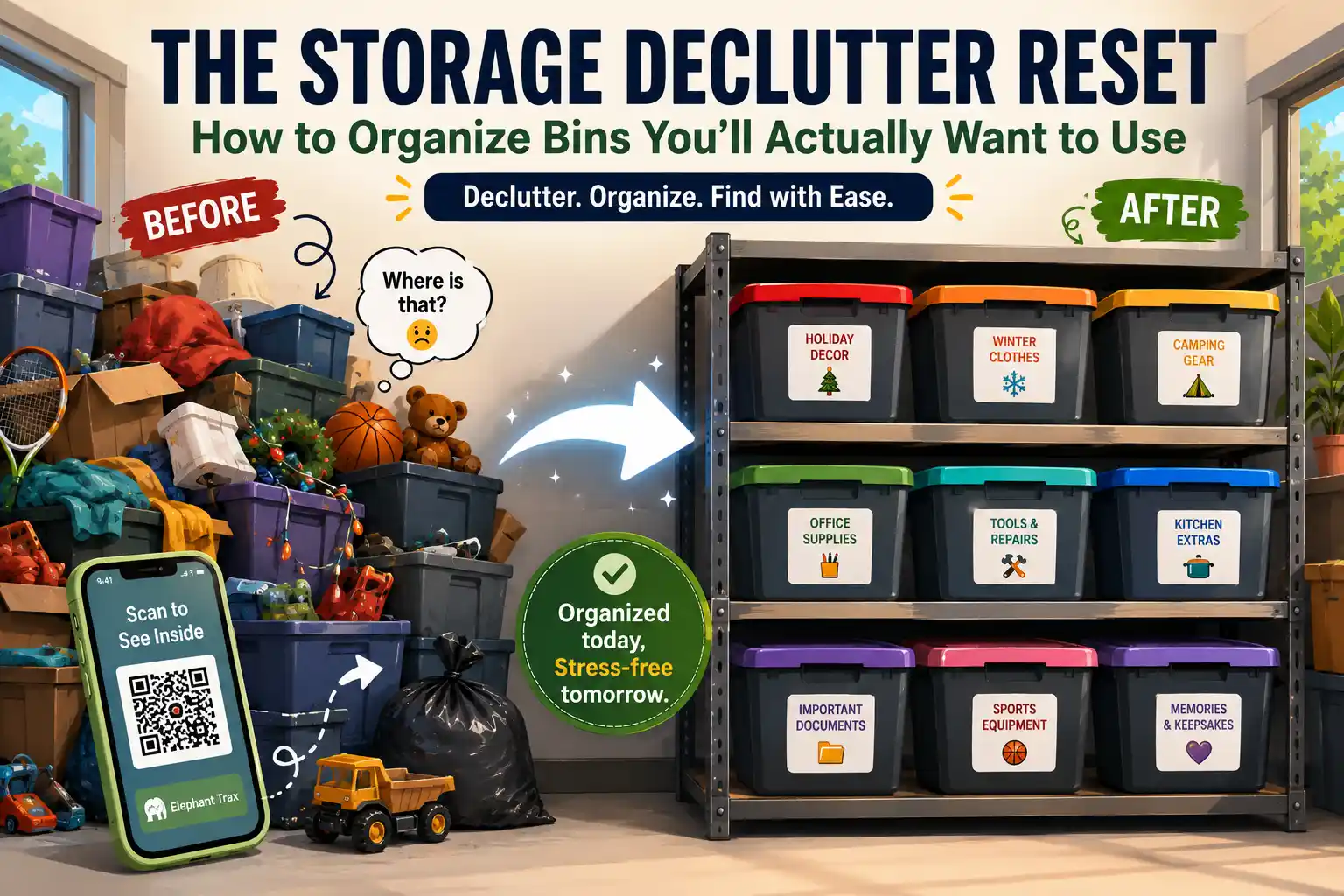
Storage spaces can become overwhelming surprisingly quickly. A few boxes turn into a crowded closet, garage, attic, or basement where finding one small item means opening several containers. The problem is not always having too many belongings—it is often not having a simple system for storing and finding them.
A storage declutter reset can change that. Instead of randomly putting things into containers, you can create a practical organization system that makes every item easier to locate, access, and put away.
Start by Taking Everything Out
Before reorganizing, give yourself a clear picture of what you actually have. Choose one storage area and remove its contents instead of trying to organize everything at once.
Create a few basic groups:
- Keep
- Donate
- Sell
- Recycle
- Relocate
Avoid putting items back immediately. Seeing everything together often reveals duplicates, forgotten belongings, and things you no longer need.
If you discover several items serving the same purpose, keep the one you use most often and consider letting the others go. Decluttering first gives you more room to build an organization system that lasts.
Group Similar Items Together
Once you have decided what stays, organize belongings by category rather than simply by size.
For example, holiday decorations can have their own category, while seasonal clothing, tools, documents, children’s items, and household supplies can each have separate storage areas.
This approach makes future searching easier because you know where a particular type of item belongs.
You can also create smaller categories within larger groups. Instead of placing every decoration together, separate ornaments, lights, wrapping materials, and outdoor decorations.
The goal is simple: one category should have one logical home.
Choose Containers Based on What You Store
Not every item needs the same type of container. Consider the size, weight, shape, and frequency of use before selecting a container.
For frequently accessed belongings, choose containers that are easy to open and move. For long-term storage, durable containers with secure lids can provide better protection.
A storage box can be useful for everything from seasonal belongings to paperwork and household supplies. Clear containers can also make it easier to identify contents without opening them.
For larger collections, consider using sturdy moving storage bins that can handle repeated handling and transportation. This can be particularly helpful when belongings may need to move between rooms, homes, garages, or temporary storage spaces.
Don’t Fill Every Container to the Top
One common organization mistake is treating every container like a suitcase.
Overfilled containers become difficult to lift, difficult to search, and frustrating to put away. Leave enough space so items can be removed without creating another mess.
Heavy belongings should generally go into smaller containers so they remain manageable. Lightweight items can go into larger ones.
You should also avoid mixing unrelated categories simply because there is extra space. Saving a little room today can create a much bigger search problem later.
Create a Labeling System
A container without a label can quickly become a mystery box.
Use clear, consistent labels that tell you exactly what is inside. Instead of writing “Stuff” or “Miscellaneous,” use specific descriptions such as:
- Winter Accessories
- Christmas Lights
- Office Supplies
- Camping Equipment
- Kitchen Extras
- Important Documents
Place labels where they are easy to see, especially if containers are stacked.
For larger storage areas, consider using color categories as well. For example, one color can represent seasonal belongings while another identifies household supplies.
A consistent labeling system reduces the amount of time spent searching.
Make Frequently Used Items Easy to Reach
Not everything belongs at the back of the storage area.
Think about how often you use each category. Items needed throughout the year should stay within easy reach, while seasonal or rarely used belongings can be placed higher, farther back, or on lower-priority shelves.
For example, holiday decorations may only be needed once a year, while cleaning supplies or spare household items might be accessed regularly.
Organizing based on frequency creates a storage system that works with your daily habits instead of against them.
Use Vertical Space Wisely
Storage areas often have unused wall and shelf space. Instead of spreading containers across the floor, take advantage of vertical storage where practical.
Shelving can help keep containers off the floor while making categories easier to separate. Keep heavier containers lower and lighter ones higher for easier handling.
Leave enough space between stacks and shelves to remove containers without moving several others first.
A good system should allow you to retrieve one item without disturbing everything around it.
Consider Digital Organization for Better Tracking
Physical labels are helpful, but large storage collections can still become difficult to manage.
A digital inventory system can add another layer of organization. You can record what is inside a container, add photos, and connect information to a specific label.
QR-based organization is especially useful when you have many containers. Instead of opening several boxes to check their contents, you can scan a code and view the information associated with that container.
This can be helpful for households, small businesses, moving projects, garages, offices, and long-term storage.
Give Every Container a Permanent Home
Organization only works when everything has somewhere to go.
After creating your categories, assign each container or group of containers a specific location. Try to keep related categories together.
For example, all seasonal decorations can occupy one shelving section, while tools and repair supplies stay in another.
When something is removed, return it to the same location. This simple habit prevents the gradual buildup of clutter.
The objective isn’t perfect organization every day. It is creating a system that is easy enough to maintain.
Review Your Storage System Regularly
Even a well-organized space can become cluttered again.
Set aside a little time every few months to review what you have stored. Seasonal changes are a natural opportunity to check containers and remove things you no longer use.
Ask yourself:
- Did I use this item recently?
- Do I still need it?
- Is it stored in the right category?
- Is the label still accurate?
- Would another container make more sense?
Small adjustments are much easier than waiting until the entire storage area becomes overwhelming again.
Build a System That Saves Time
The best storage system isn’t the one that looks perfect in a photograph. It is the one that makes everyday life easier.
A successful reset should help you answer three questions quickly: What do I have? Where is it? How can I find it?
With thoughtful categories, appropriate containers, clear labels, accessible placement, and optional digital tracking, you can turn a cluttered storage area into a system that is easier to maintain.
Whether you’re organizing household belongings, preparing for a move, or managing business supplies, the goal is the same: stop searching and start finding.
A smart labeling approach such as Elephant Trax can take this idea further by connecting physical containers with digital information, helping you keep track of what is stored without opening every container.