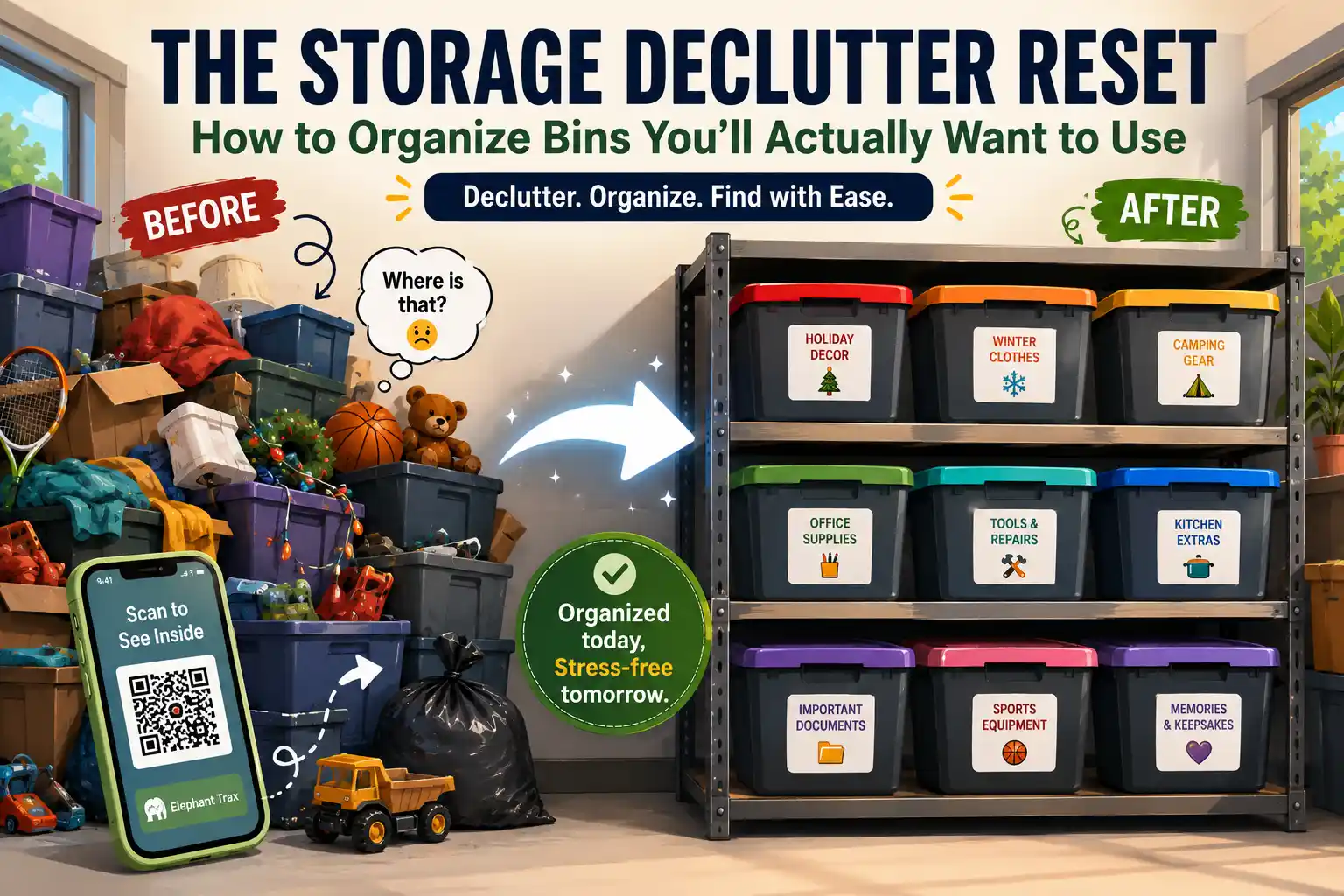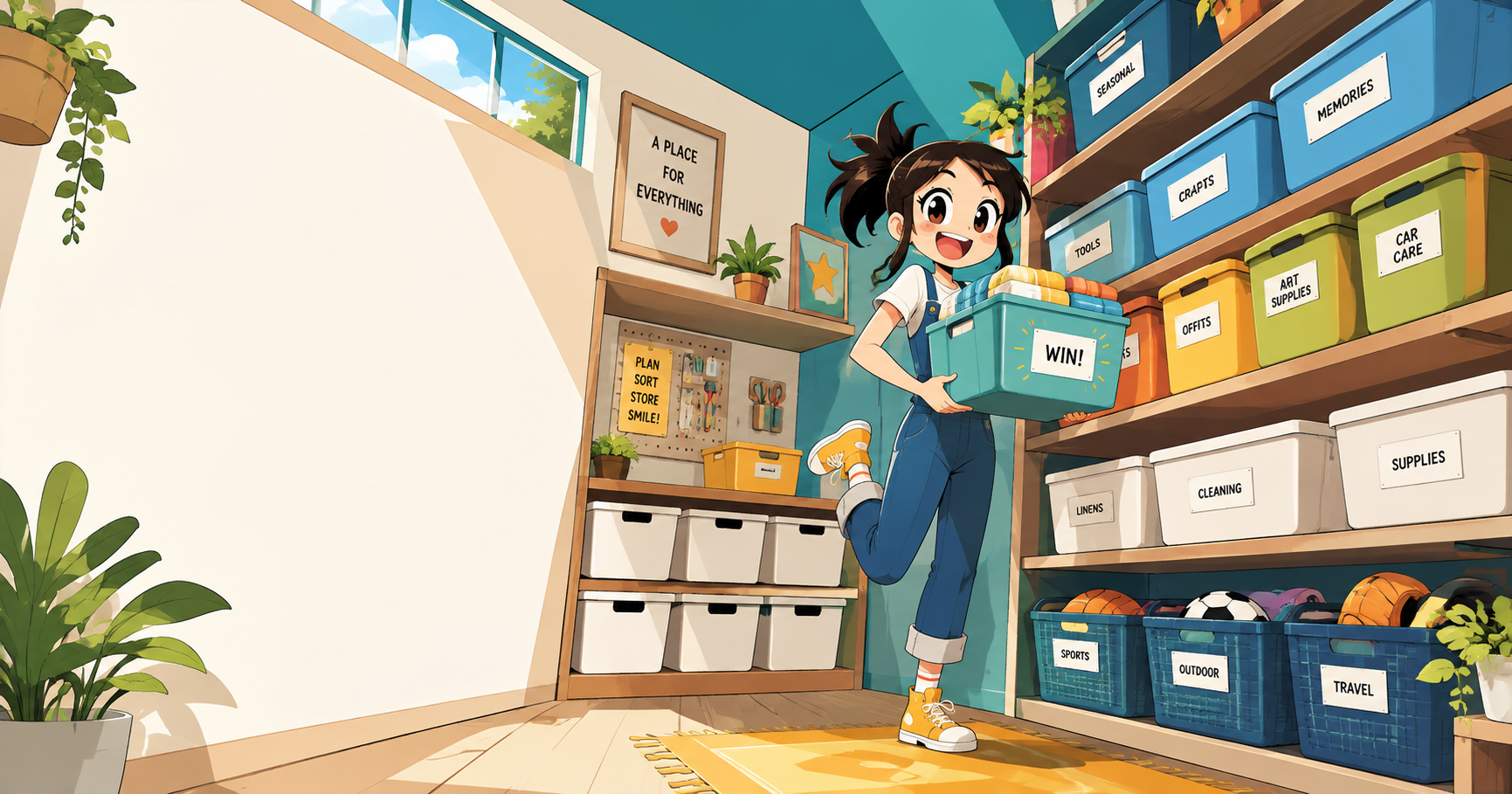
Seasonal belongings can quickly take over closets, garages, attics, and storage rooms. Holiday decorations, winter clothing, camping equipment, gardening tools, sports gear, and other occasional-use belongings may only be needed for a few months each year, but they still need a reliable place to stay when they are not in use. Without an organized system, finding these belongings can become frustrating and time-consuming.
The right storage approach can help keep seasonal storage items protected, accessible, and easy to identify. With suitable containers, clear categories, smart labeling, and a simple inventory system, you can make better use of your available space while reducing unnecessary clutter.
Start by Sorting Seasonal Belongings
Before purchasing containers or reorganizing a storage area, begin by sorting everything you already have. Group belongings according to their purpose and the season when they are normally used.
For example, winter clothing can be separated from summer accessories, while holiday decorations can be grouped separately from camping equipment. This makes it easier to understand how much storage space each category requires.
Sorting is also a good opportunity to remove belongings that are damaged, outdated, duplicated, or no longer useful. Storing fewer unnecessary items creates more room and makes the entire organization system easier to maintain.
Choose the Right Storage Containers
The type of container you use can have a major impact on long-term organization. Durable plastic bins are often useful for seasonal belongings because they can provide protection from dust and everyday handling.
Choose containers that are appropriate for the items being stored. Clothing may benefit from breathable storage solutions, while decorations and household supplies may be better suited to sturdy lidded containers.
Using containers of similar sizes can also make shelves and storage areas easier to arrange. Uniform containers can be stacked more efficiently and create a cleaner overall appearance.
Create Seasonal Categories
A simple category system can make stored belongings much easier to manage. Instead of placing unrelated items together, organize them according to season, activity, or purpose.
Possible categories include:
- Winter clothing
- Summer accessories
- Holiday decorations
- Gardening supplies
- Camping equipment
- Sports equipment
- Travel accessories
- Seasonal home décor
Clear categories help you know where belongings belong after each season. They also make it easier to return items to storage instead of creating random piles around the house.
Label Every Container Clearly
A storage container is only useful if you can identify its contents later. Labels should provide enough information to understand what is inside without opening the container.
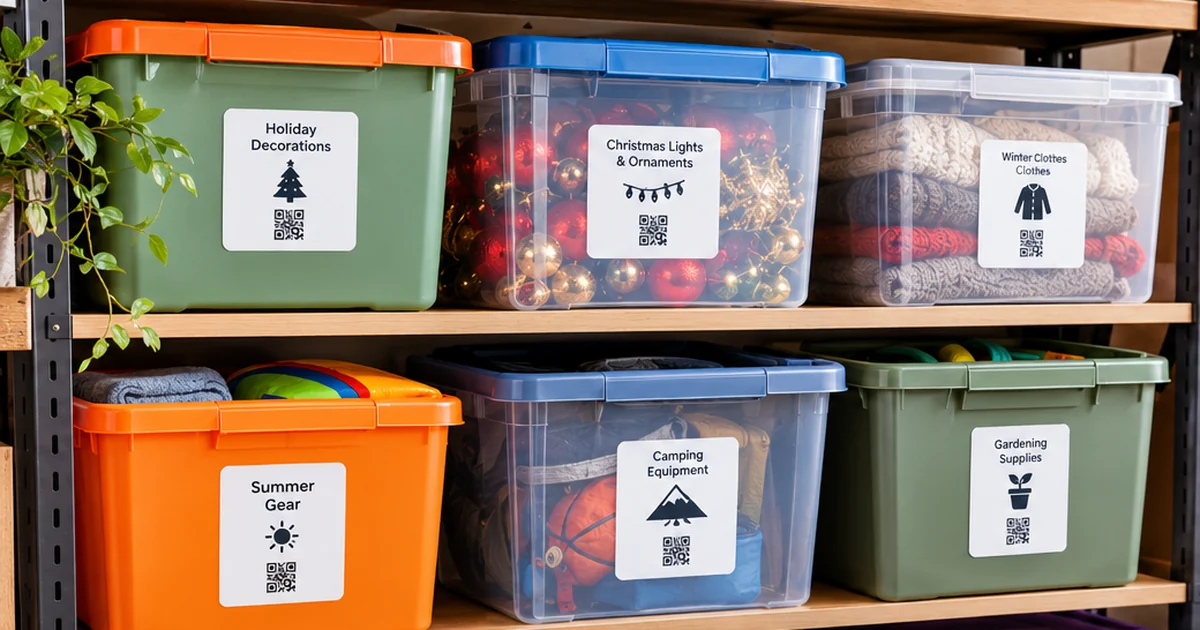
For example, instead of writing simply “Winter,” consider using a more specific description such as “Winter Clothes – Jackets, Scarves, and Gloves.” More detailed labels can save time when several containers contain similar belongings.
QR labels can provide an additional layer of organization by connecting a physical container with digital information. This can be especially helpful when a storage box contains many different items.
Use Smart QR Labels for Detailed Information
Traditional labels are useful for basic identification, but they have limited space. Smart QR labels can connect storage containers to digital records that provide additional information.
A digital record may include the contents of a box, the quantity of items, the storage location, or notes about when the belongings are normally used. This can make a large collection of seasonal belongings easier to manage.
For example, a box containing holiday decorations could have a digital record listing lights, ornaments, ribbons, and other decorations inside. When the season arrives, you can check the information before opening multiple containers.
Organize Items According to Frequency of Use
Not every seasonal item needs to be stored in the same location. Items that will be needed soon should be placed somewhere easy to reach, while belongings that will remain unused for many months can go into less accessible areas.
For example, winter coats may be stored near the front of a closet when colder weather approaches. Summer camping equipment might be moved to a more accessible area before vacation season.
This simple approach reduces unnecessary lifting, moving, and searching.
Make the Most of Vertical Space
Storage areas often have unused vertical space. Shelving units can help transform walls and high areas into useful storage locations.
Place heavier containers on lower shelves and lighter boxes higher up. Avoid creating unstable stacks that are difficult or unsafe to access.
Clear aisles are also important. Even an organized storage room can become difficult to use if containers block pathways. Leave enough space to safely remove boxes when needed.
Create a Seasonal Rotation System
A seasonal rotation system can make yearly organization much easier. When one season ends, review the belongings you used and prepare them for storage.
Clean items before putting them away, remove anything that needs repair, and return everything to its assigned container. At the same time, bring the next season’s belongings into more accessible areas.
For example, as summer ends, camping equipment and summer accessories can be moved into longer-term storage while winter clothing and cold-weather equipment become easier to reach.
Repeating the same process each year creates a predictable routine.
Keep an Inventory of Stored Belongings
An inventory can be particularly useful when you have many storage containers. Instead of relying entirely on memory, maintain a simple record of what is stored and where it is located.
An inventory might include the container name, category, location, and important contents. Digital inventory records can be even more useful because they can be updated when belongings are added, removed, or moved.
This approach can prevent duplicate purchases. Before buying another item, you can check your existing storage records to see whether you already own something similar.
Protect Items During Long-Term Storage
Organization should also include protection. Seasonal belongings may remain untouched for several months, so appropriate storage conditions are important.
Keep containers away from areas where they may be exposed to unnecessary moisture, heat, or direct sunlight. Clothing should be stored clean and completely dry, while delicate decorations may need additional protective wrapping.
Avoid overfilling containers because tightly packed belongings can become difficult to remove and may be more likely to become damaged.
Keep Frequently Used Items Accessible
Some seasonal belongings are used repeatedly throughout the season. These items should not be buried beneath containers that are rarely needed.
Create an accessible section for frequently used belongings. This could be a specific shelf, cabinet, closet area, or part of a garage.
As your needs change, the location can change as well. The goal is to make the storage system work around your lifestyle rather than forcing you to follow an inconvenient arrangement.
Make the System Easy for Everyone to Follow
A successful storage system should be simple enough for everyone in the household to understand. Use consistent labels, categories, and storage locations so that family members know where items belong.
If everyone follows the same system, putting belongings away becomes easier. It also reduces the possibility of one person creating a separate storage method that makes items harder for others to find.
Consider taking a few minutes after each season to review the system and identify areas that could be improved.
Final Thoughts
Managing seasonal belongings does not have to be complicated. The combination of appropriate containers, clear categories, effective labels, digital records, and a simple rotation routine can transform an overcrowded storage area into a practical system.
Whether you are organizing holiday decorations, clothing, outdoor equipment, or household supplies, the key is to make every container easy to identify and every category easy to maintain. QR labels and digital inventory tools can further improve visibility when you have a large number of stored belongings.
With a consistent storage strategy, seasonal items can stay protected and organized throughout the year while making it much easier to find what you need when the next season arrives.