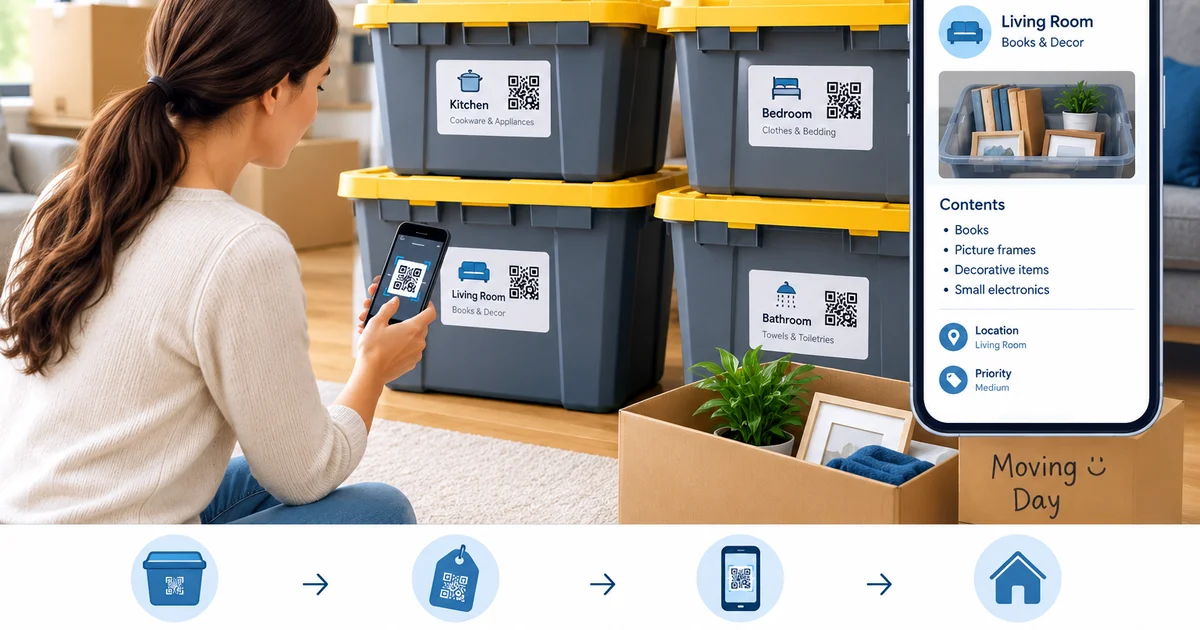
Moving can quickly become overwhelming when dozens of boxes and bins are packed with household belongings. The real challenge often begins after everything is packed. Finding one specific item can mean opening multiple containers, moving stacks around, and trying to remember where something was placed.
Using smart labels on moving bins can create a more organized packing system. Instead of relying only on handwritten descriptions, smart labels can connect each container with useful information about its contents. This makes it easier to identify, track, and manage belongings throughout the moving process.
Why Moving Bins Need a Better Labeling System
Moving bins are useful because they can hold many different household items and are often easier to reuse than traditional cardboard boxes. However, when several bins look similar, identifying their contents can become difficult.
A simple label such as “Kitchen” or “Bedroom” may not provide enough information. You might know which room a bin belongs to but still have no idea whether it contains plates, appliances, cookware, or small accessories.
A detailed labeling system helps solve this problem. Smart labels allow you to associate a bin with additional information, making the contents easier to identify without opening it.
Start by Creating Categories
Before packing your moving bins, divide your belongings into clear categories. Think about what you use together and where those items will eventually belong.
For example, kitchen items can be separated into cookware, dining supplies, appliances, and pantry accessories. Bedrooms can be divided into clothing, bedding, accessories, and personal items.
Creating categories first makes it easier to decide what should go into each bin. It also makes the information connected to your smart labels more useful.
Give Every Bin a Unique Identity
Once you have your categories, give every moving bin its own identity. Avoid using the same description for several containers.
Instead of labeling three bins simply as “Kitchen,” give each one a more specific description, such as cookware, serving items, or small appliances.
Smart labels can make this system even more useful by giving each bin a unique digital identity. When you need something later, you can check the information associated with the specific label.
Record What Goes Inside
One of the most important steps is recording the contents of each bin while packing. You do not necessarily need to list every small item individually. Focus on the belongings that would be useful to identify later.
For example, a bin could contain baking equipment, measuring tools, mixing bowls, and kitchen accessories. Recording this information gives you a clearer idea of what is stored inside without opening the container.
This can be especially helpful for items that will not be unpacked immediately after the move.
Use QR-Based Smart Labels
QR-based smart labels provide a convenient way to connect physical moving bins with digital information. A QR code can be scanned with a smartphone, allowing you to access the information associated with that container.
Instead of writing a long list on the outside of a bin, you can keep the physical label simple while storing more detailed information digitally.
This approach can be useful when you have a large number of bins and want a consistent way to manage them.
Keep Room Information Visible
Although smart labels can provide detailed digital information, it is still useful to include basic visible information on the physical label.
For example, you can identify the destination room or general category so that movers and family members know where the bin should go.
A bin intended for the bedroom can be recognized quickly, while the QR code can provide additional information about its contents.
Combining simple visible information with digital details creates a practical organization system.
Organize Bins by Priority
Not everything needs to be unpacked on the first day. Some belongings will be needed immediately, while others can remain stored for weeks or months.
Consider separating moving bins into priority levels. Essential household items should be easier to access, while seasonal decorations, archived documents, and rarely used belongings can be placed toward the back of your storage area.
Smart labels make it easier to identify these categories without repeatedly opening containers.
Make Unpacking Easier
The organization system you create while packing can save time during unpacking. When each bin has clear information, you can decide which containers should be opened first.
For example, you may want to unpack kitchen essentials, bathroom supplies, bedding, and everyday clothing before seasonal decorations or rarely used items.
Knowing what each bin contains helps you create a more efficient unpacking process instead of opening containers randomly.
Keep Your Information Updated
Moving is not the only time when smart labels can be useful. After settling into your new home, you may move items between bins or reorganize your storage areas.
If your digital information is updated whenever the contents change, your labeling system can remain useful over time.
This is particularly helpful for storage bins that will continue to be used for seasonal clothing, holiday decorations, children’s belongings, tools, or household supplies.
Use the Same System for Long-Term Storage
A good moving organization system does not have to end once the move is complete. The same smart labels can help manage long-term household storage.
Instead of replacing your labels after unpacking, you can continue using the system for bins that go into closets, garages, attics, basements, or storage rooms.
This turns a temporary moving strategy into a long-term home organization solution.
Final Thoughts
Organizing moving bins with smart labels can make packing, moving, unpacking, and long-term storage easier to manage. By creating categories, giving each bin a unique identity, recording its contents, and using QR-based labels, you can reduce the time spent searching through containers.
The key is to create the system before the move becomes chaotic. When every bin has clear information and a consistent label, you can quickly understand what is stored inside and where it needs to go.
Smart labeling transforms ordinary moving bins into a more organized storage system, helping you keep track of your belongings from the first day of packing through long-term home organization.