Searching through piles of boxes to find one forgotten item can turn a simple task into a frustrating experience. Whether you are looking for seasonal decorations, old documents, tools, or household supplies, poorly organized storage can make finding anything feel like a treasure hunt.
The good news is that storage does not have to be complicated. With a clear organization system, properly labeled containers, and modern tracking methods, you can spend less time searching and more time getting things done.
Why Searching Through Storage Takes So Much Time
One of the biggest storage problems is that people often remember what they own but not exactly where they placed it. A box may contain several different items, while multiple containers may look almost identical from the outside.
Over time, storage areas can become even harder to navigate. Items are moved around, new boxes are added, and older labels may no longer accurately describe their contents.
This is especially common in garages, attics, basements, closets, and storage units. Without a consistent system, finding one item may require opening several containers.
Start With a Simple Storage System
The first step toward smarter storage is creating categories. Instead of putting unrelated belongings into the same container, group similar items together.
For example, holiday decorations can have their own container, while camping equipment, children’s belongings, clothing, tools, and paperwork can each have separate categories.
Once your categories are established, choose appropriate storage bins for each group. Try to avoid mixing too many unrelated items in one container because this makes future searches more difficult.
A consistent system also makes it easier to put items away after using them. When everything has a designated place, you are less likely to create new piles of clutter.
Make Your Storage Bins Easy to Identify
A well-organized container is only useful if you can identify its contents. Clear labels can help you understand what is inside without opening the lid.
Instead of using general descriptions such as “Miscellaneous,” use specific labels such as “Winter Accessories,” “Christmas Decorations,” or “Painting Supplies.”
If your containers are stacked, place labels where they remain visible. You can also organize containers by frequency of use. Items you need regularly should stay within easy reach, while rarely used belongings can be placed on higher shelves or toward the back.
Improve Garage Storage With Better Tracking
The garage is one of the most challenging areas to organize because it often serves multiple purposes. It may contain tools, sports equipment, gardening supplies, automotive products, seasonal decorations, and household overflow.
Effective garage storage starts by dividing the space into zones. Keep tools together, sports equipment in another area, and seasonal belongings in a dedicated section.
Shelving can help use vertical space while keeping containers off the floor. Once everything has a location, labeling each container makes it easier to identify what belongs where.
A tracking system becomes particularly useful when your garage contains many similar-looking boxes. Instead of relying only on memory, you can connect each container with information about its contents.
Use QR Labels for Smarter Organization
Traditional labels provide useful information, but they can be limited when a container holds many different items. QR labels can provide a more detailed way to connect physical storage with digital information.
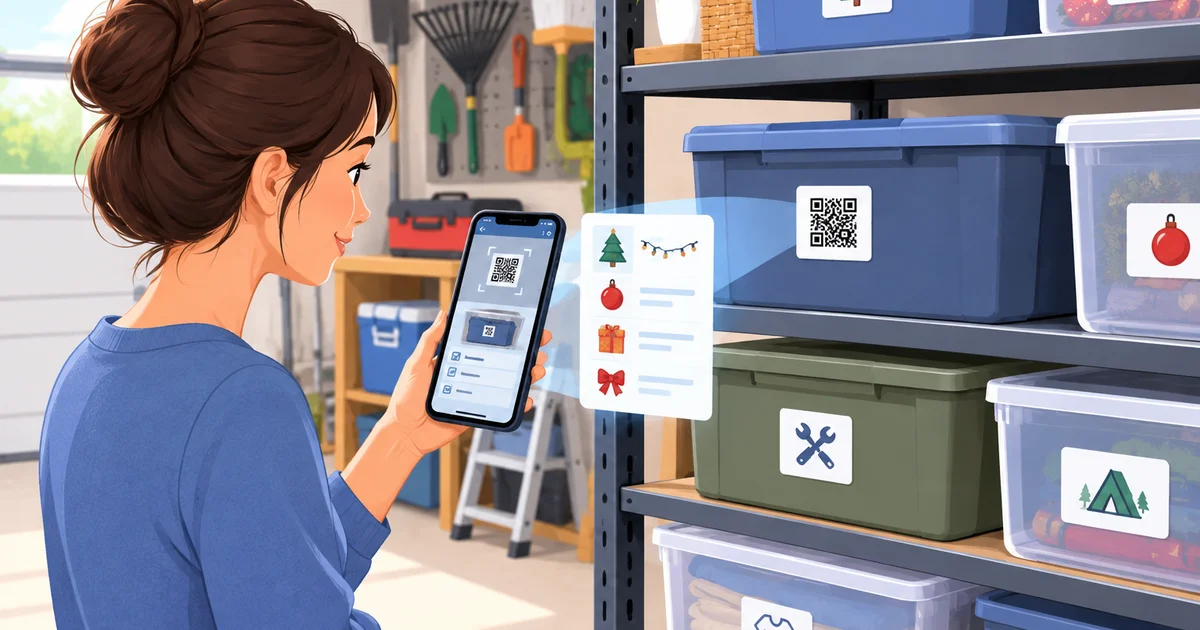
A QR code placed on a storage container can be scanned with a smartphone. Depending on the system you use, the associated information can help you identify the container and remember what is stored inside.
For example, a box labeled with a QR code could be associated with information about holiday decorations, including lights, ornaments, wrapping supplies, and other seasonal items.
This means you do not necessarily have to open several containers just to check which one contains what you need.
Create a Storage Inventory
A simple inventory can make your organization system even more effective. You do not have to record every small item. Focus on belongings that are valuable, difficult to replace, frequently needed, or easy to forget.
For each container, consider recording its category and major contents. You can also note its location, such as “Garage – Shelf 3” or “Closet – Upper Section.”
When items are removed or added, update the information. Keeping your inventory current prevents your storage system from becoming outdated.
Organize for the Future
Good organization is not just about cleaning your storage area once. It is about creating a system that remains useful.
Whenever you purchase new items, decide where they belong before putting them away. When you remove something from storage, return it to its designated location after use.
It is also helpful to review storage areas occasionally. Remove things you no longer need and update labels when the contents of a container change.
Small maintenance habits can prevent a well-organized space from becoming cluttered again.
Stop Searching and Start Finding
The goal of smart storage is simple: make every item easier to locate. Categorized containers, visible labels, organized shelves, and digital tracking can work together to reduce unnecessary searching.
For people who want to take this approach further, Elephant Trax offers a smart way to organize and track stored belongings using QR-based labels. Its system can help connect physical containers with digital information, making it easier to know what is stored and where to find it.
If you are tired of opening multiple boxes to locate one item, Elephant Trax can be a practical addition to your storage system. Instead of simply storing your belongings, you can create a more searchable and manageable system that helps you stop searching and start finding.