
Moving Tips
Moving well isn’t about one big strategy — it’s about a lot of small decisions made early enough that they don’t turn into problems later. This page is a quick-reference collection of moving tips you can use at any stage, whether you’re just starting to plan or already knee-deep in boxes.
Planning Tips
- Start earlier than feels necessary. Most moving stress comes from compressing weeks of work into the final few days.
- Get rid of things before you pack them, not after. Decluttering first means you’re never paying — in time, boxes, or truck space — to move things you don’t actually want.
- Book movers or a truck as soon as your date is confirmed. Availability tightens fast around the start and end of each month.
- Create a simple room-by-room plan. Knowing the order you’ll pack in prevents last-minute scrambling through rooms you forgot about.
- Set aside a folder for moving-related paperwork. Lease documents, mover contracts, and address change confirmations are much easier to manage in one place.
01
Label boxes with contents, not just the room.
“Kitchen” tells you less than “Kitchen — Mugs, Small Appliances.”
02
Number your boxes and keep a simple master list.
Even a basic list makes it far easier to confirm nothing was lost or left behind.
05
Keep hardware with its furniture.
Tape screws and small parts into a labeled bag attached directly to the disassembled piece.
Packing Tips
03
Pack heavy items in small boxes, light items in large ones.
This keeps boxes manageable to lift and reduces the risk of a box breaking under its own weight.
04
Use soft items — towels, blankets — as padding for breakables.
It saves on packing materials and uses space you’d need to fill anyway.
06
Photograph electronics setups before unplugging them.
A quick photo saves guesswork when reconnecting everything later.
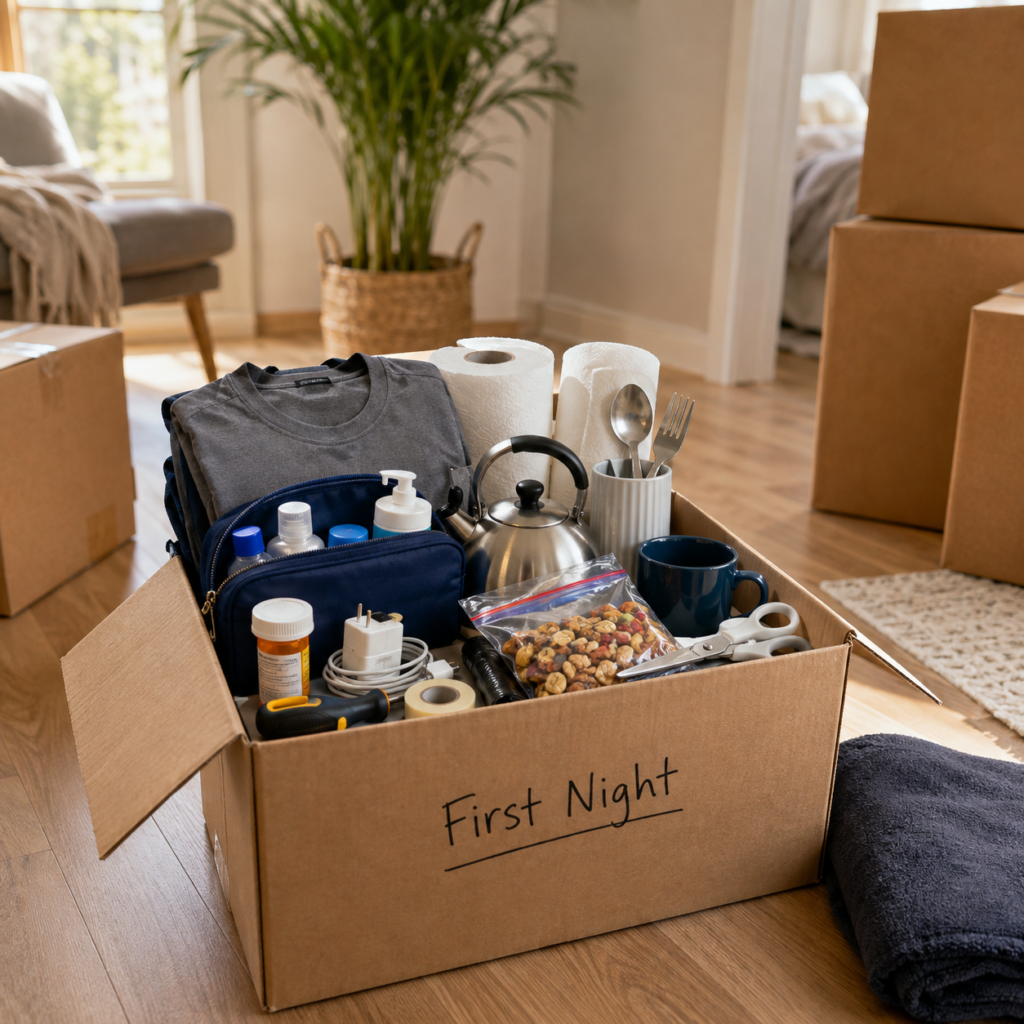
The “First Night” Box
One of the most useful moving habits is packing a single box (or small suitcase) that stays with you personally, not in the truck:
A change of clothes for each person
Toiletries and any medications
Phone chargers
Basic tools (screwdriver, tape, scissors)
Toilet paper, paper towels, and a couple of trash bags
Snacks and a few basic kitchen items (kettle, mugs, utensils)
Skipping this step is one of the most common regrets people mention after moving day.
Moving Day Tips
Do a final walkthrough before movers leave
— check closets, cabinets, garages, and any easy-to-forget storage spots.
Keep valuables and important documents with you
not in the moving truck.
Take a photo of the truck’s contents before unloading,
especially for long-distance moves involving overnight stops.
Set up beds first,
even before unpacking anything else — a made bed at the end of a long day matters more than people expect.
Confirm utilities are active before you arrive,
especially electricity and water.
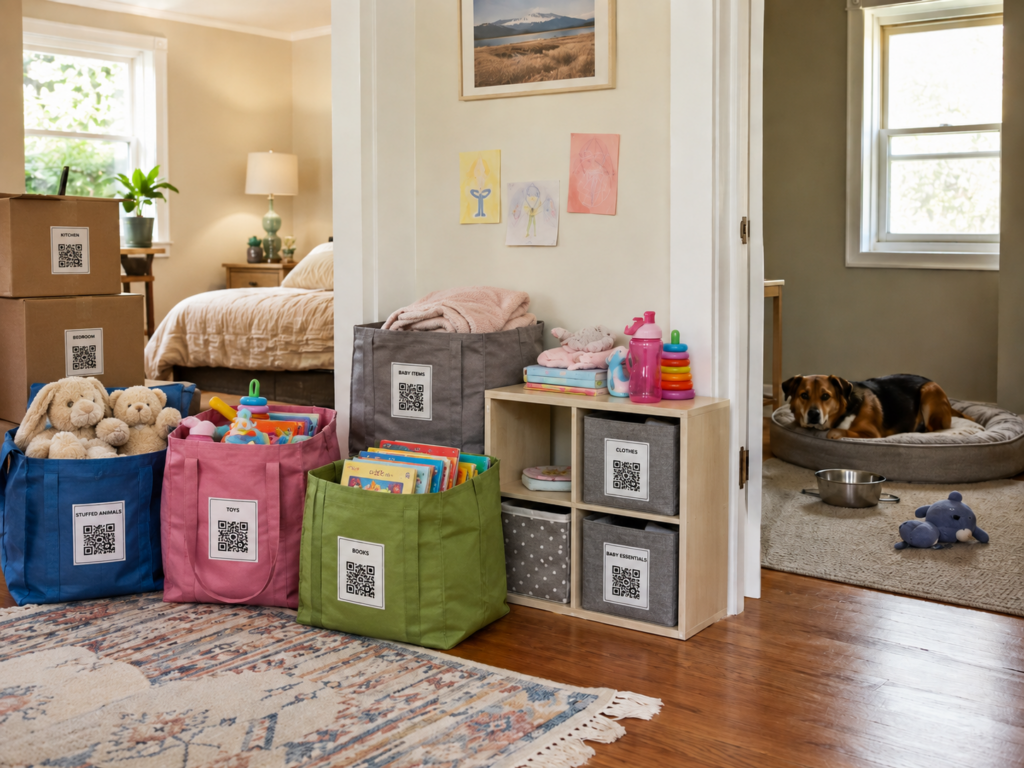
Tips for Moving With Kids or Pets
- Keep a familiar item (a favorite toy, a specific blanket) easily accessible, not packed away in the truck
- Maintain regular meal and nap/feeding times as much as possible during the transition
- Set up one familiar-feeling space in the new home early, even if the rest is still in boxes
- For pets, keep them in a quiet, closed room during the busiest parts of move-in day to reduce stress
Unpacking Tips
- Unpack by priority, not by whatever box is closest. Bedroom and bathroom essentials first, kitchen second, everything else after.
- Break down empty boxes immediately. Flattened boxes take up far less space and make the space feel less chaotic while you’re still unpacking.
- Don’t feel pressured to unpack everything in one weekend. A slower, more deliberate unpack often results in better long-term organization than a rushed one.
- Reassess as you go. Moving is a natural point to notice what you don’t actually need anymore — no obligation to unpack something just because it made the move.
A Tip for Staying Organized Mid-Move
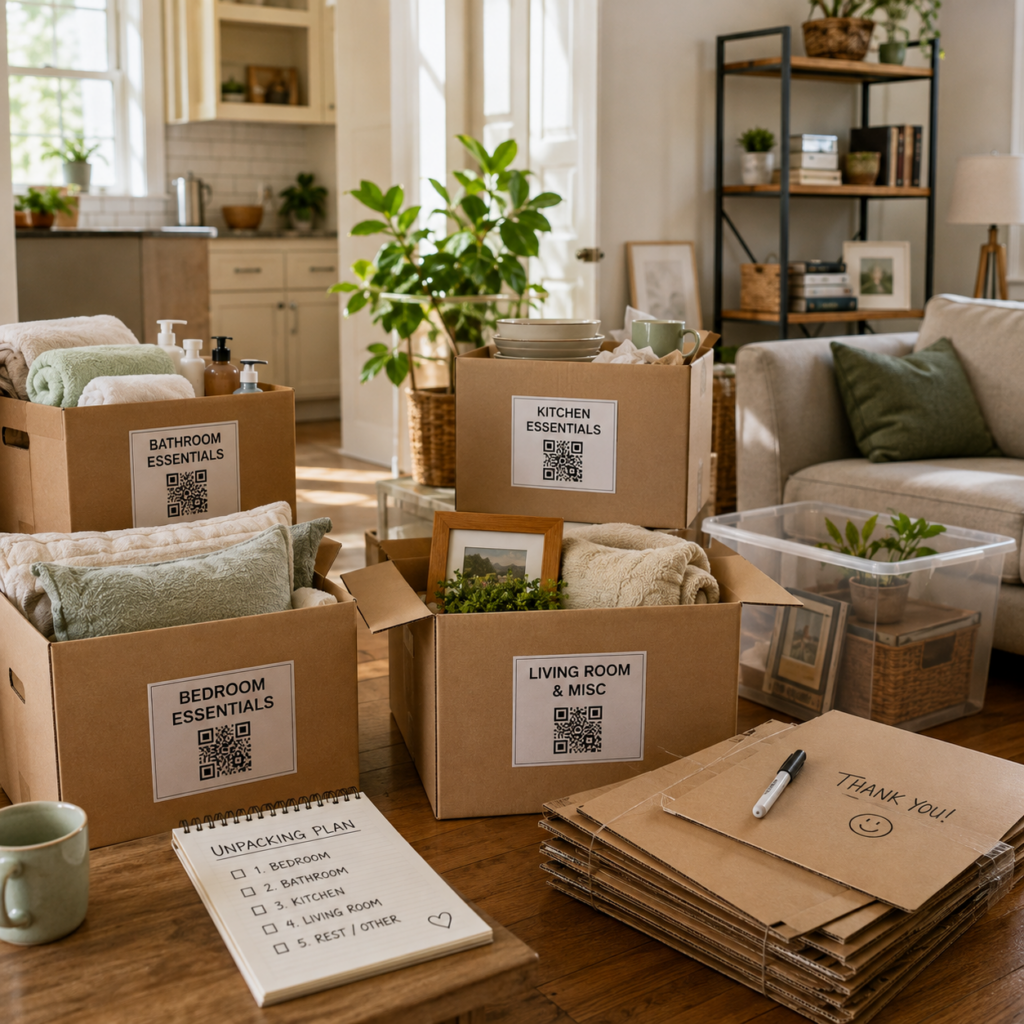
Even with careful labeling, it’s easy to lose track of exactly what’s in which box once you’ve got dozens of them stacked in a new place — especially if boxes get moved, restacked, or partially opened before the rest of the unpacking is done.
Some people manage this with a simple numbered list; others use a tool like Elephant Trax, which links a scannable QR tag on each box to a digital record you can check and update from your phone — helpful for confirming exactly what’s inside a box before deciding whether it’s worth opening right away.
The best moving tips aren’t complicated — they’re just the small habits that prevent a stressful day from becoming a stressful week.