Decluttering
Decluttering gets talked about like it’s a weekend project — clear out a closet, fill a donation bag, done. In reality, most clutter builds up slowly over months or years, which means it rarely gets solved in a single afternoon either. This page is about realistic decluttering: how to actually decide what stays and what goes, how to avoid the common traps that make people give up halfway through, and how to keep clutter from creeping back once you’ve cleared it.

Why Decluttering Feels So Much Harder Than It Sounds
Most people don’t struggle with decluttering because they lack motivation. They struggle because of a few predictable obstacles:
Decision fatigue — making dozens of “keep or go” choices in a row is mentally exhausting, so people either rush through carelessly or stall out entirely
Sentimental attachment — items tied to memories or people feel impossible to part with, even when they’re rarely used or seen
“I might need this someday” — a mindset that quietly justifies keeping almost anything
No system for what happens next — clutter gets pulled out, sorted into piles, and then never actually leaves the house
Understanding which of these is actually slowing you down makes it much easier to choose the right approach.

A More Realistic Way to Start
Instead of trying to declutter an entire home in one push, smaller, defined sessions tend to produce better and more lasting results.
Start With Low-Stakes Categories
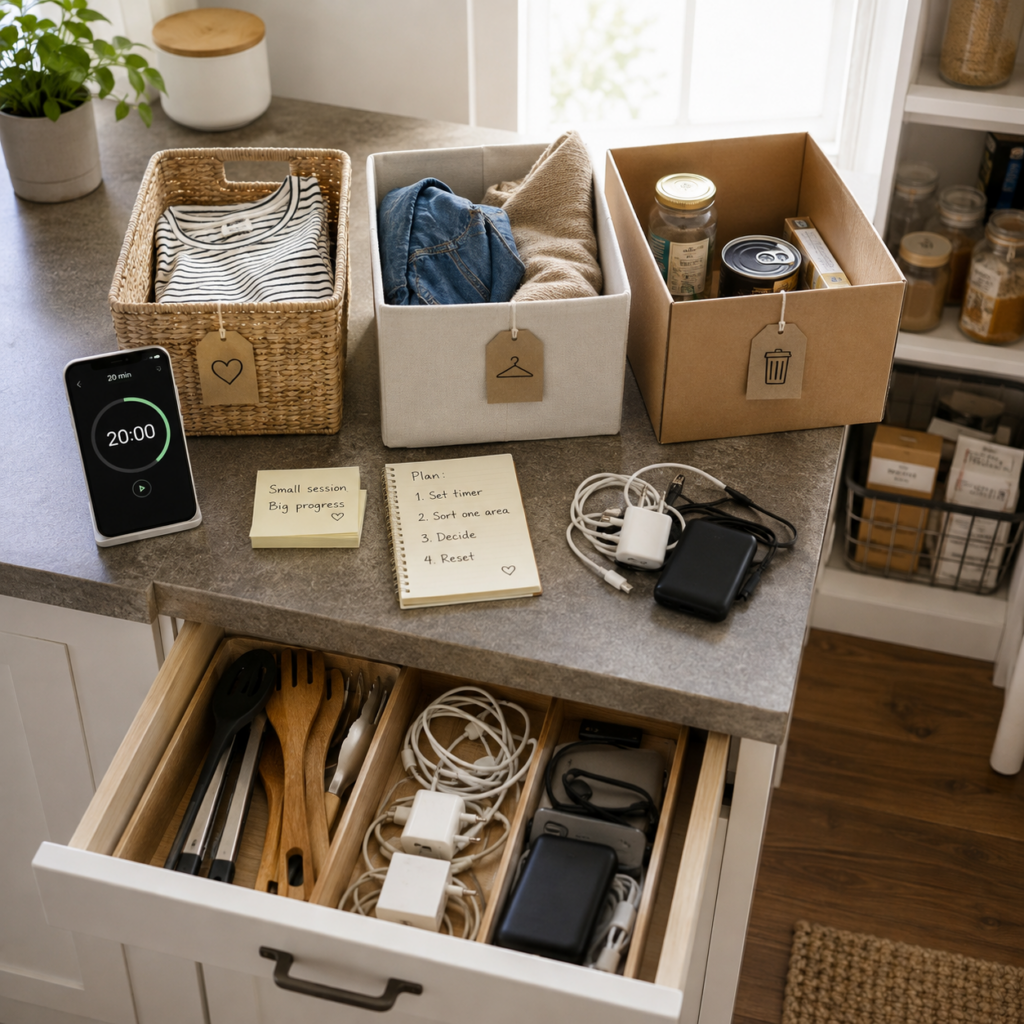
Begin with items that carry little emotional weight — expired pantry items, duplicate kitchen tools, old cables, or clothing that clearly no longer fits. Building momentum on easy decisions makes harder categories more manageable later.
Set a Time Limit, Not a Finish Line
A 20-minute timer in one drawer or shelf is far more sustainable than an open-ended goal to “declutter the whole garage today.” Short, repeated sessions add up without triggering burnout.
Use Three Categories, Not Two
Most people default to “keep” or “throw away,” which makes every decision feel bigger than it needs to be. Adding a third option — donate/sell — takes some of the guilt out of letting go of things that are still useful to someone else.
Handling Sentimental Items
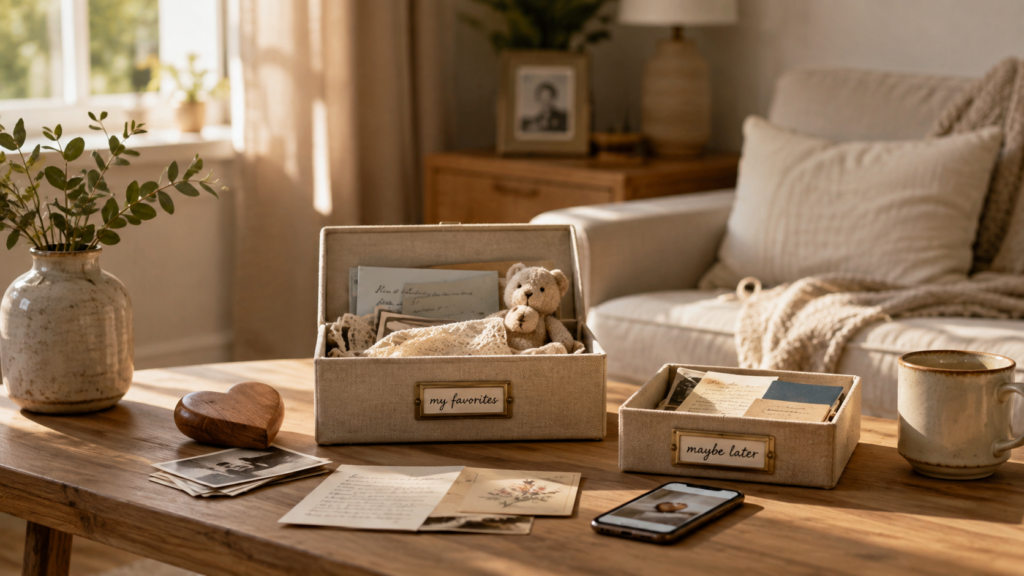
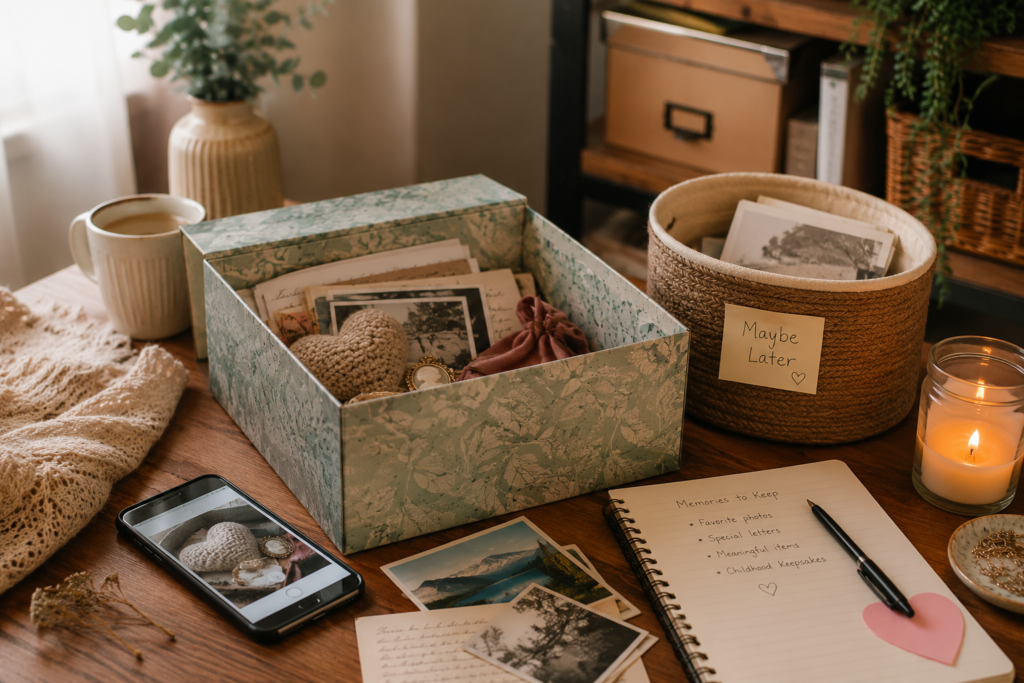
Sentimental clutter is usually the hardest category, and rushing through it rarely works. A few approaches that help:
Decluttering Different Spaces
Closets
Start by removing anything unworn in the last year, and separate seasonal items so only the current season stays easily accessible.
Kitchen
Duplicate tools, expired pantry items, and gadgets used once and forgotten are usually the fastest wins in any home.
Digital Clutter
Decluttering isn’t only physical — overflowing inboxes, duplicate files, and old photos can create the same mental weight as a cluttered room, and often take less time to clear.
Shared or Family Spaces
These require a bit more patience, since decisions usually involve more than one person. Setting shared expectations ahead of time helps avoid conflict over what counts as clutter versus what someone else considers important.
Keeping What You Keep, Organized
Decluttering and organizing are related, but they’re not the same step. Once you’ve decided what to keep, how you store and label it determines whether clutter creeps back in. Vague or missing labels are one of the most common reasons a decluttered space slides back into disorder within a few months — it’s hard to keep things in their place when it’s not clear what “their place” actually is.
This is where a simple system makes a real difference. Some people stick with basic written labels; others move to something more detailed, like Elephant Trax, where a scannable QR tag links each bin or storage area to a digital record you can update as contents change — so the label stays accurate even as what’s inside evolves over time.
However you approach it, the real goal of decluttering isn’t an empty room for a day. It’s a system that’s easy enough to maintain that the clutter doesn’t quietly find its way back in.