Closet Organization
A closet is one of the smallest spaces in a home, yet it’s often the one that causes the most daily frustration. It’s where mornings get derailed by a search for a specific shirt, where “I have nothing to wear” happens despite a closet full of clothes, and where good intentions to organize tend to fall apart within a few weeks. This page covers realistic, lasting approaches to closet organization — not just how to make a closet look good for a day, but how to keep it functional long after the initial cleanup.
Why Closets Become Disorganized So Quickly
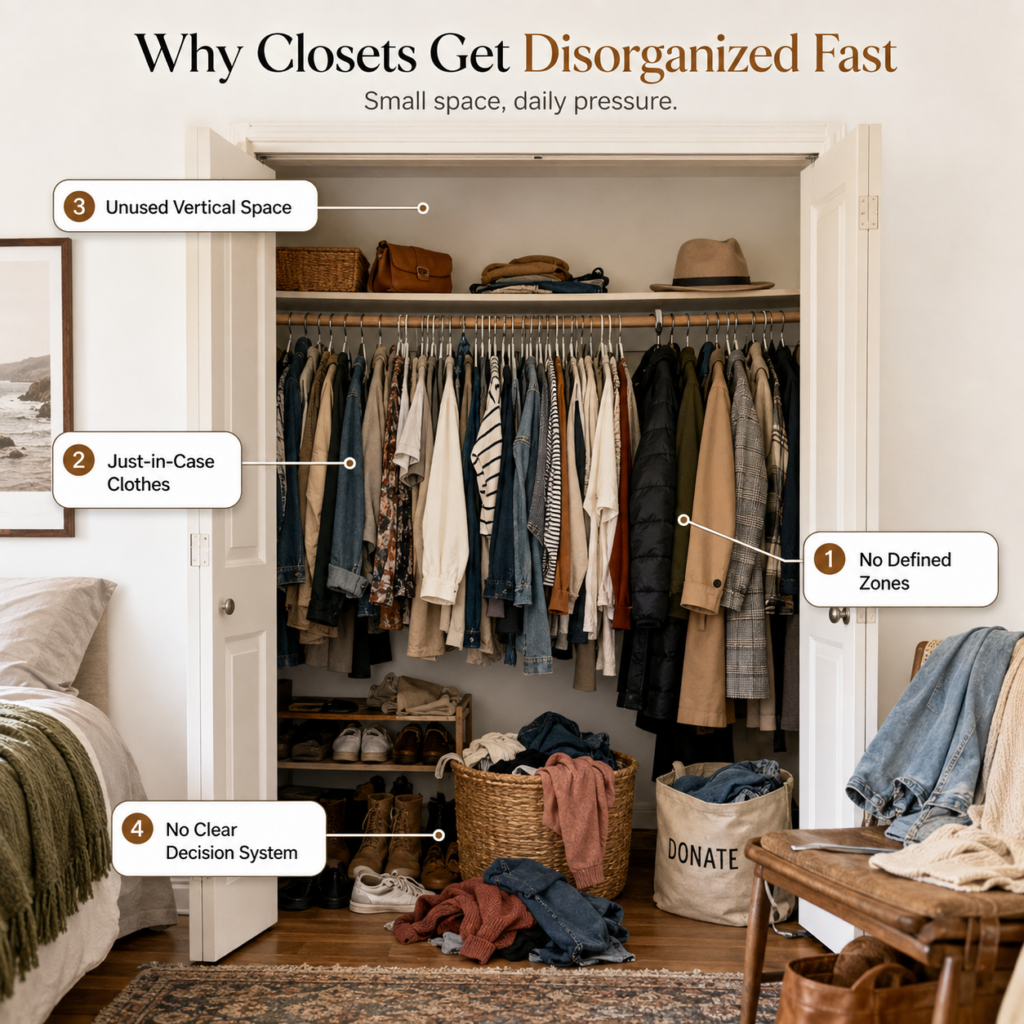
Closets are small, high-traffic spaces, which makes them especially prone to a few recurring problems:
No defined zones, so everything from off-season coats to daily outfits competes for the same easy-to-reach space
Clothes kept “just in case,” even when they haven’t been worn in years
Vertical space left empty, while the floor becomes a dumping ground for shoes, bags, and miscellaneous items
No system for what’s clean, worn, or ready to donate, so decisions pile up instead of getting made
Because closets are used every single day, small inefficiencies compound quickly — a five-second delay finding something becomes a real source of daily friction.
Start by Editing, Not Organizing
It’s tempting to jump straight into bins and hangers, but organizing a closet full of things you don’t actually wear just means a tidier version of the same problem.
The Hanger Trick
Turn all hangers backward at the start of a season. Each time you wear an item, flip its hanger the right way. After a few months, it’s obvious which items are actually being worn — and which ones aren’t.
The One-Year Rule
If something hasn’t been worn in over a year (excluding true special-occasion items), it’s a strong candidate to donate or sell. This single rule clears more space than most storage products ever will.
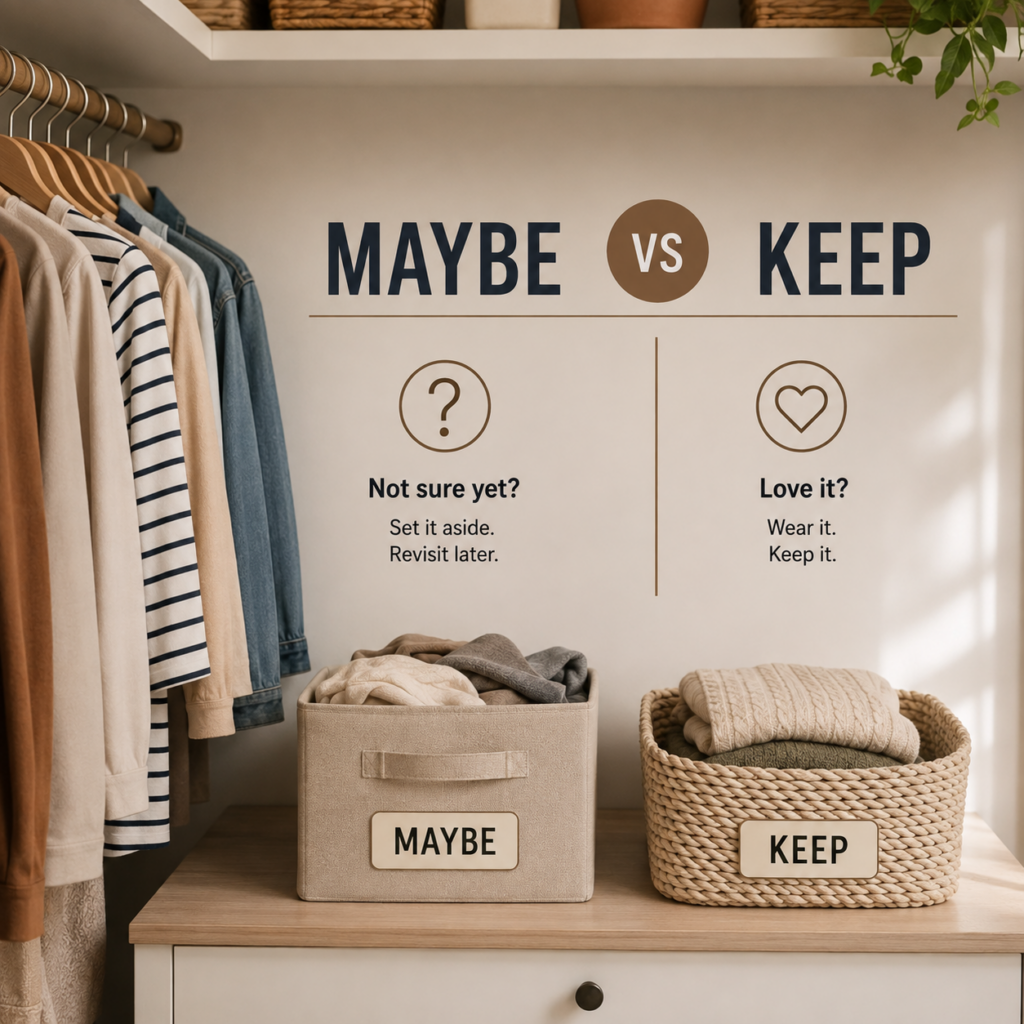
Separate “Maybe” From “Keep”
For items you’re unsure about, a temporary box works better than a rushed decision. Revisit it in three to six months — if it hasn’t been touched, the decision usually becomes obvious.
Organizing What’s Left
Once a closet holds only what actually gets used, the next step is arranging it so everything has a clear, logical place.
Group by Category, Then by Color
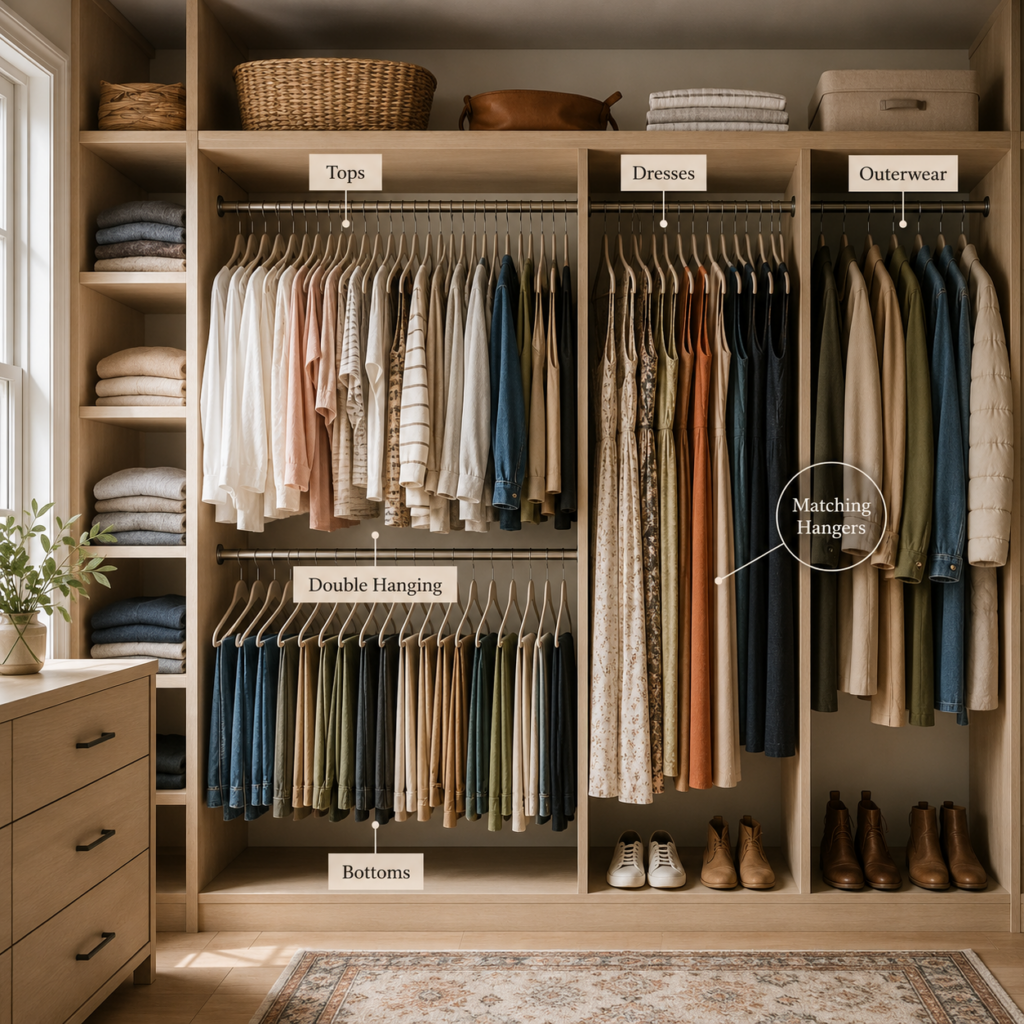
Grouping tops, bottoms, dresses, and outerwear separately makes outfits faster to put together. Within each category, arranging by color adds a second layer of speed — and makes it immediately obvious when something’s missing or misplaced.
Use Matching Hangers
Mismatched hangers waste space and make a closet look cluttered even when it’s technically organized. Slim, uniform hangers also free up meaningful horizontal space in smaller closets.
Make Use of Double-Hanging Space
Shorter items — shirts, folded pants, skirts — rarely need the full height of a closet rod. Adding a second rod underneath instantly doubles usable hanging space for these categories.
Shelving, Drawers, and Small Item Storage
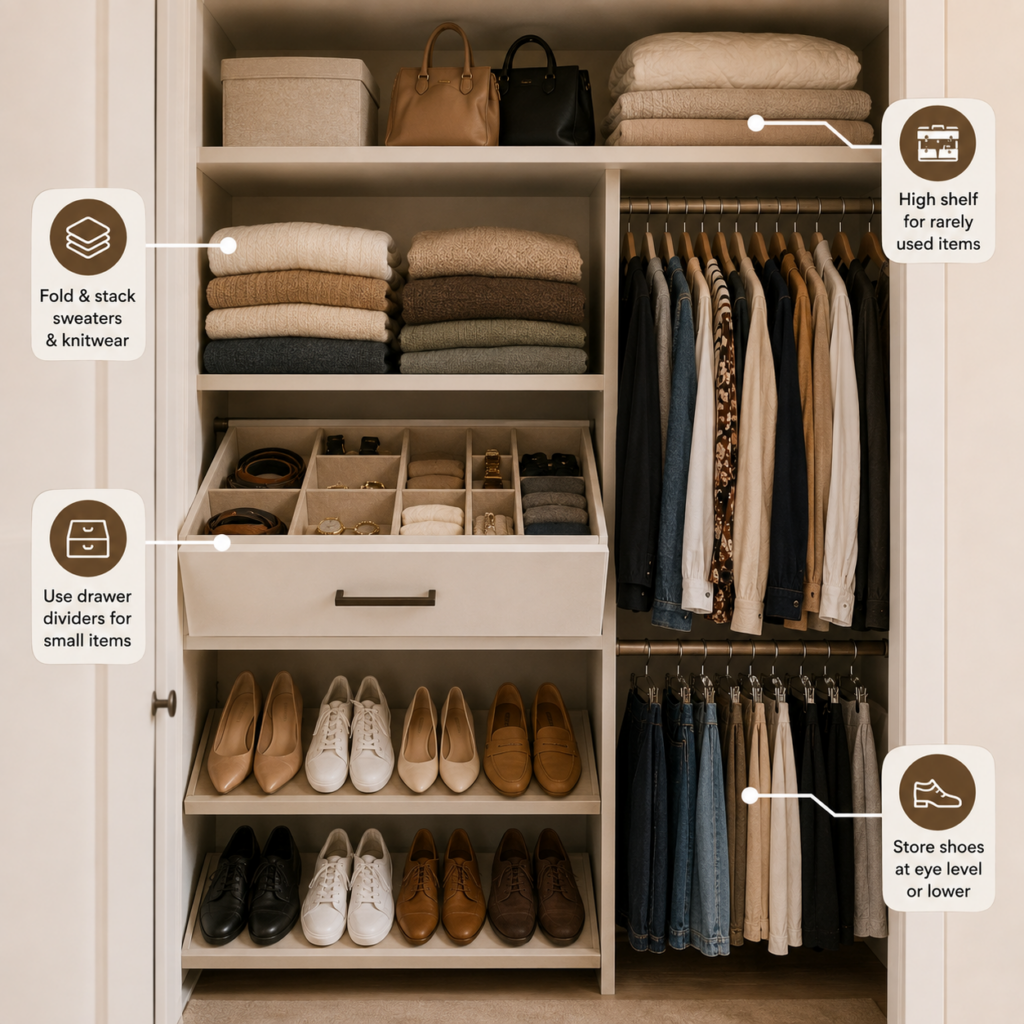
Not everything belongs on a hanger. A few approaches for the rest:
Seasonal Closet Rotation
Trying to fit every season’s wardrobe into one closet at once is one of the most common causes of clutter. A simple rotation helps:
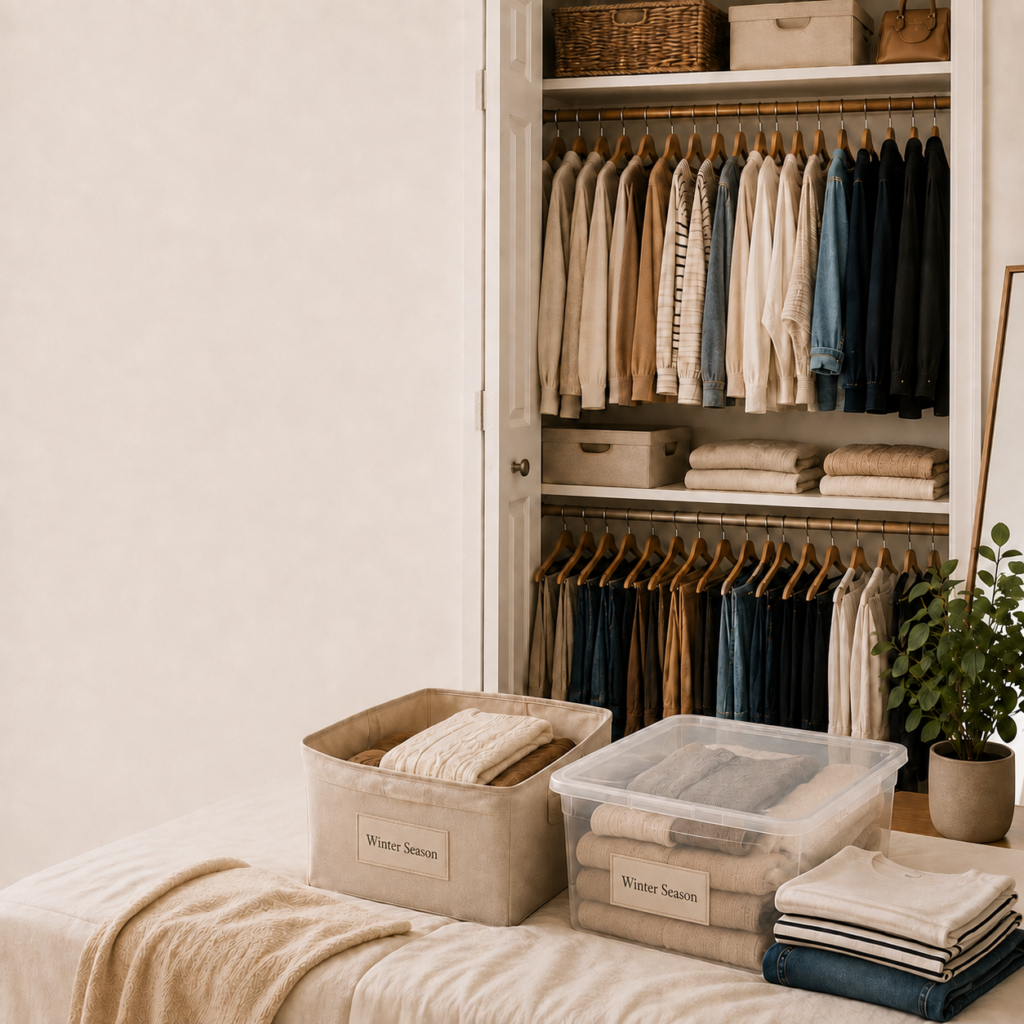
Keeping Track of What’s in Storage Bins Nearby
Closet organization often extends beyond the closet itself — off-season clothing, special-occasion wear, and extra bedding frequently end up in nearby storage bins. A written label helps, but it only reflects what was true the day it was written, and can get harder to trust as contents shift between seasons.
Some people manage this with a simple written list; others use something more reliable, like Elephant Trax, where each storage bin gets a scannable QR tag linked to a digital record you can check and update from a phone — useful for knowing exactly what’s inside a seasonal bin before pulling it down from a shelf.
A closet that stays organized isn’t the one with the fanciest system — it’s the one simple enough to keep up with every single day.