Garage Organization
For a lot of homes, the garage ends up doing three jobs at once — parking, storage, and workspace — and none of them particularly well. It’s often the last room to get organized and the first one to fall back into chaos, mostly because it collects things other rooms don’t have space for. This page focuses specifically on garages: how to think about the space, set it up in zones, and keep tools and equipment from disappearing into the clutter.
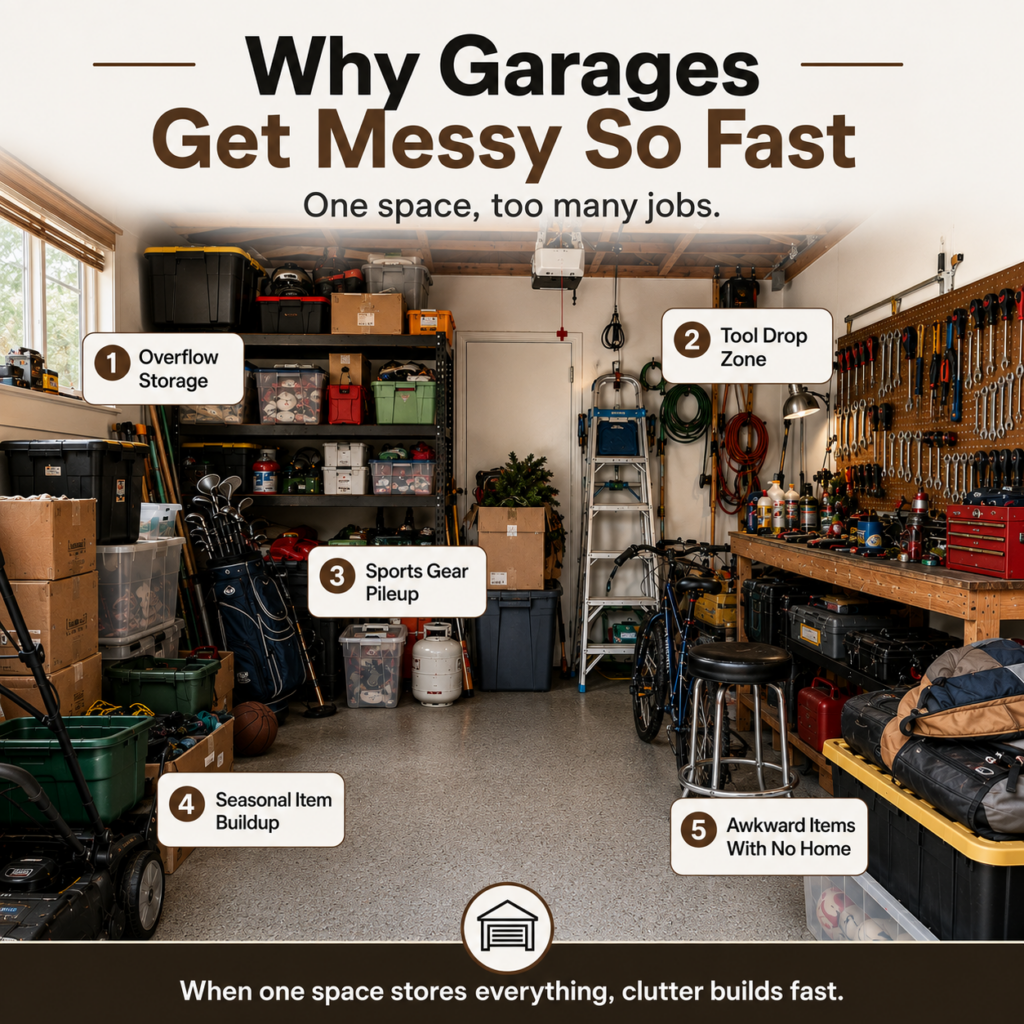
Why Garages Get Disorganized Faster Than Other Rooms
A few things make garages uniquely prone to clutter:
They’re a default dumping ground. Items that don’t have an obvious home elsewhere in the house often end up in the garage “for now” — and stay there indefinitely.
They serve multiple purposes at once. Parking, tool storage, seasonal items, and hobby space all compete for the same square footage.
They lack built-in organization. Unlike closets or kitchens, garages rarely come with shelving, drawers, or defined storage areas — everything has to be added.
Visibility is low. Items get stacked, boxed, or pushed to the back, so it’s easy to forget what’s actually in there.
Start With Zones, Not Just Shelves
Before buying any storage products, it helps to divide the garage into functional zones based on how the space actually gets used:
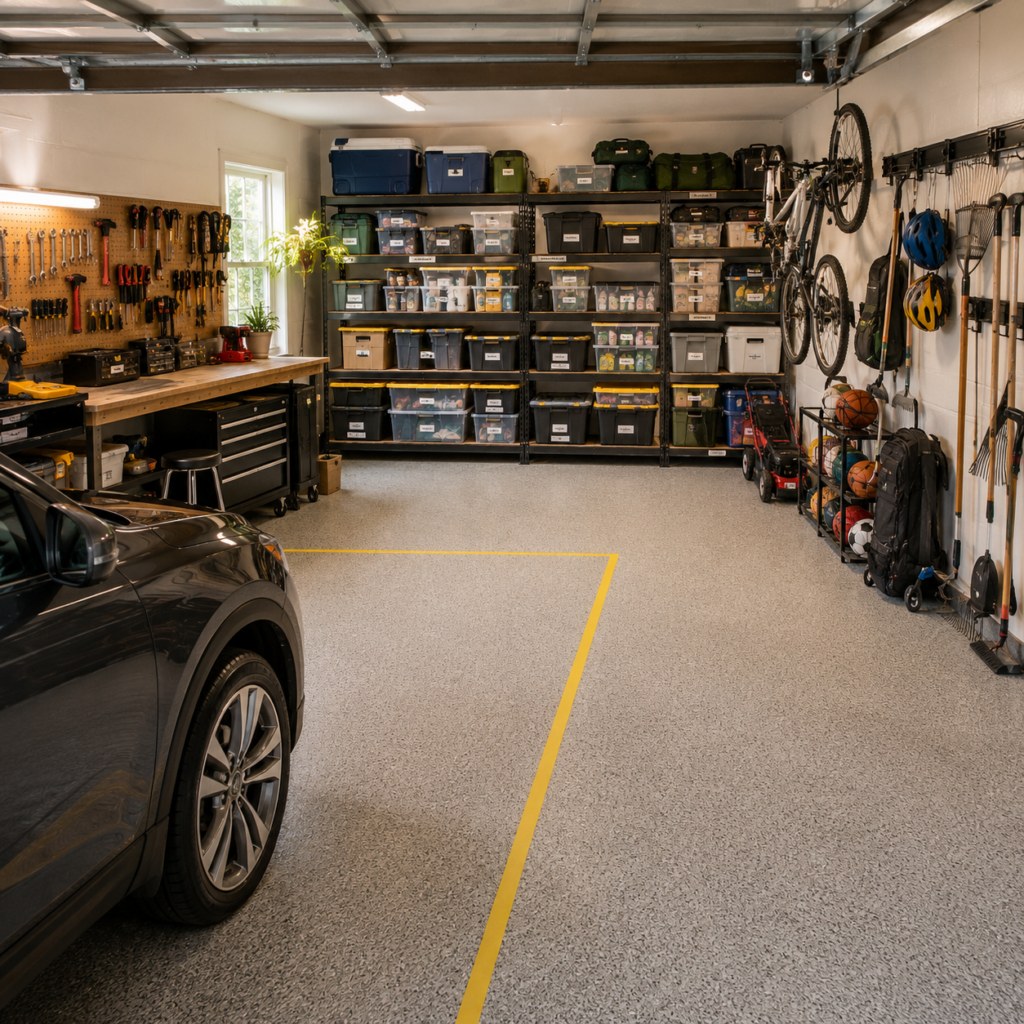
Parking Zone
If a car needs to fit, this space should be treated as off-limits for storage — even temporarily. Marking a clear boundary (tape on the floor works fine) helps prevent gradual creep into the parking area.
Tool and Workbench Zone
Frequently used tools should live within arm’s reach of a workbench, ideally on a wall-mounted system rather than in drawers where they get buried under less-used items.
Storage Zone
Seasonal items, bulk supplies, and things used only a few times a year belong in a dedicated section — usually shelving along a back wall — separate from active tool space.
Sports and Outdoor Gear Zone
Bikes, sports equipment, and yard tools tend to be awkward shapes that don’t fit neatly into bins. A dedicated hook or rack system in one area keeps them from sprawling across the whole garage.
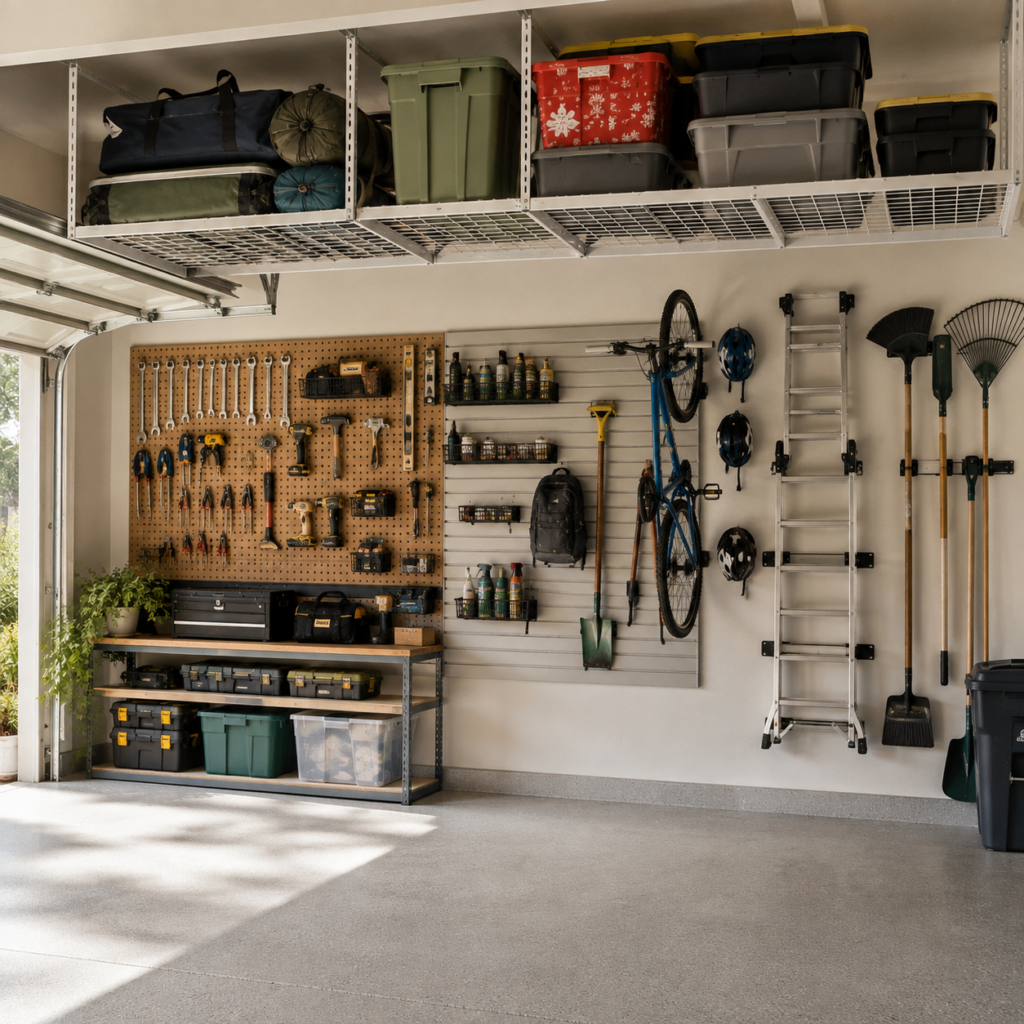
Making the Most of Vertical Space
Garage floors fill up fast, but walls and ceilings are usually underused. A few approaches that consistently help:
Organizing Tools So They’re Actually Easy to Find
Tool clutter is one of the most common garage complaints, and it usually comes down to a lack of a consistent “home” for each item.
Keeping Track of What’s Actually in the Garage
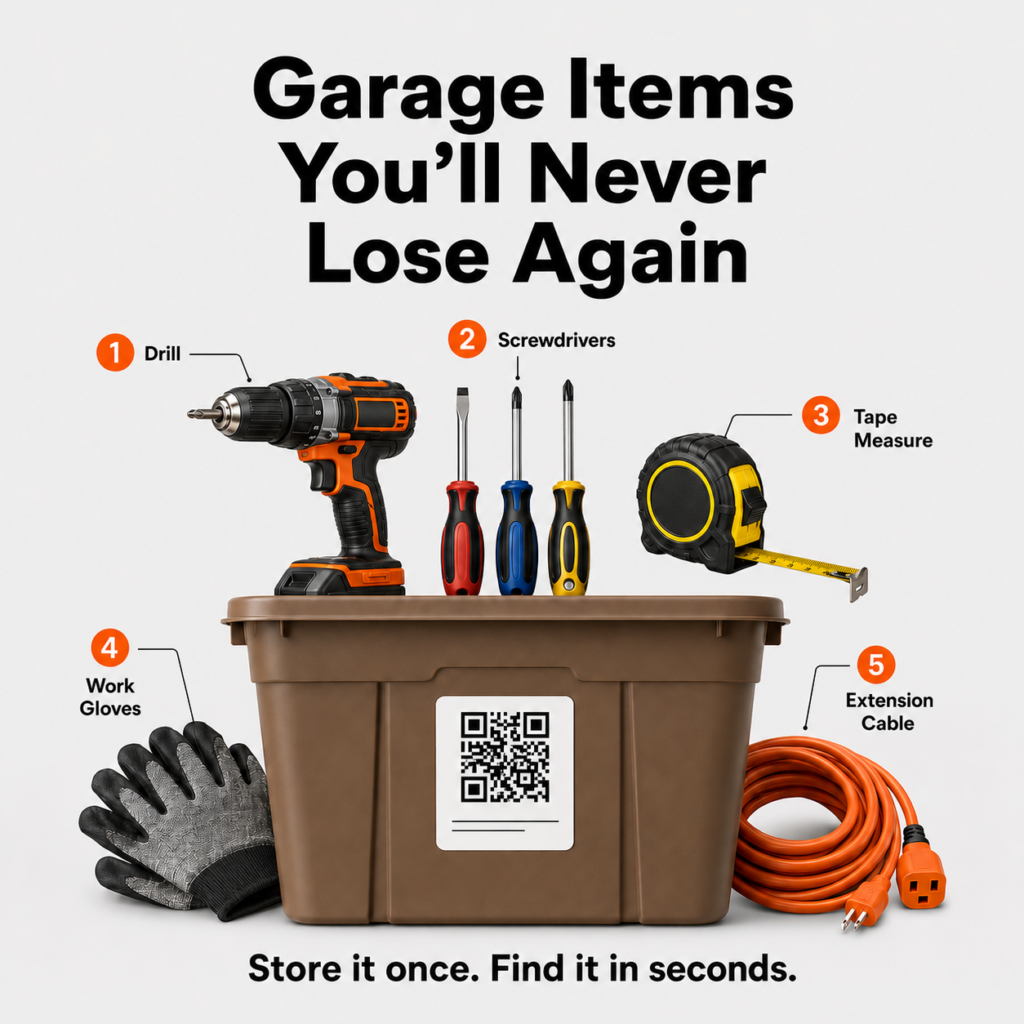
Garages tend to accumulate more inventory than any other room in the house — tools, hardware, seasonal items, sports gear, and half-finished projects all in one place. Even with good zoning, it’s easy to lose track of exactly what’s stored where, especially in bins on higher shelving that aren’t opened often.
Some people manage this with a basic written inventory list; others use something more automatic, like Elephant Trax, where each bin, tool case, or shelf gets a scannable QR tag linked to a digital record — so checking what’s stored in a specific spot takes a phone scan instead of pulling bins down to look.
However it’s tracked, the real win in a garage isn’t a perfectly styled space — it’s being able to walk in, find what you need in under a minute, and park the car without moving three boxes first.