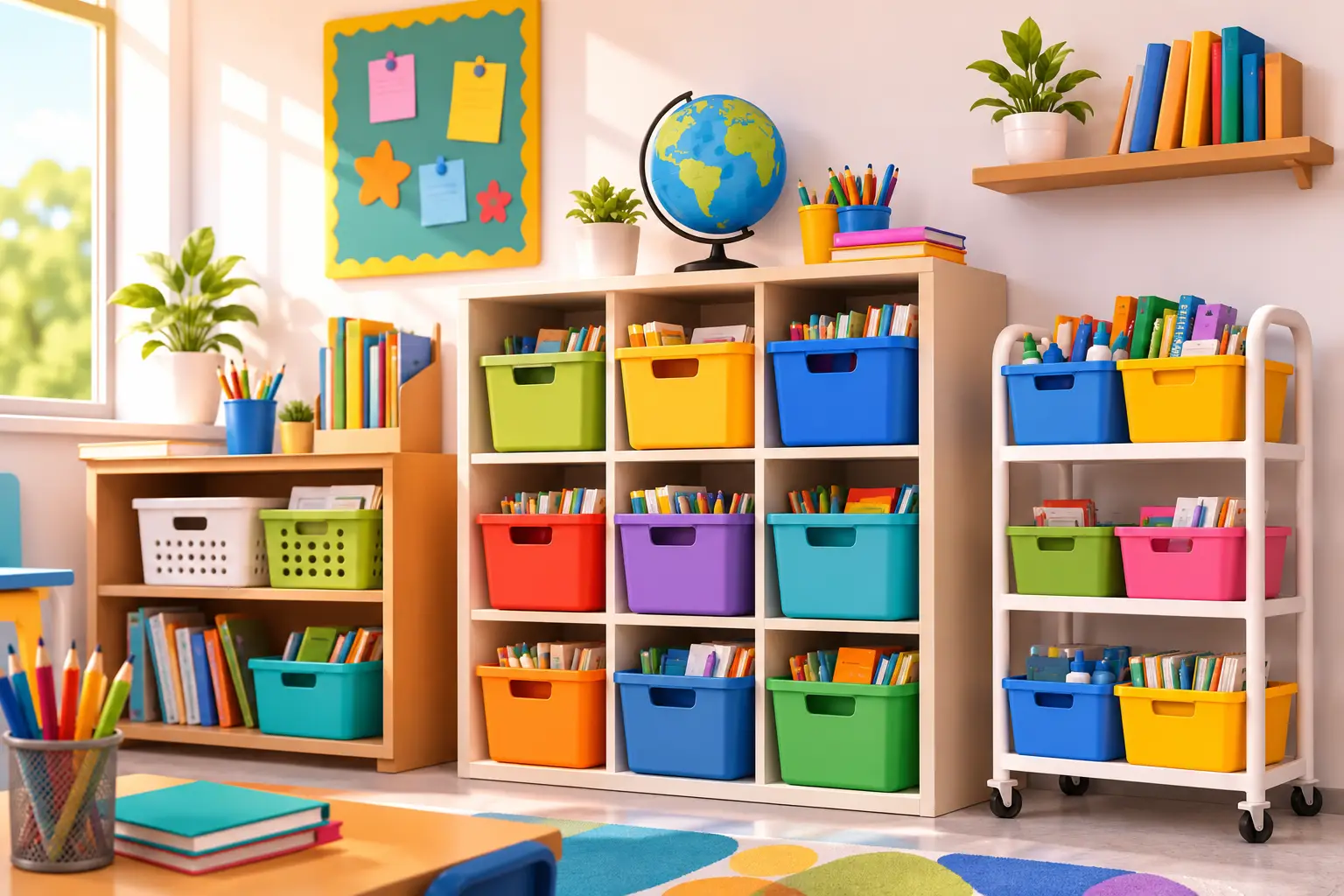
A well-organized classroom can make the school day easier for both teachers and students. When supplies, learning materials, books, and activity resources have designated places, less time is spent searching and more time can be focused on teaching. A practical organization system does not need to be expensive or complicated. With the right containers, labels, and storage habits, even a small classroom can feel more spacious and manageable.
Start With Storage Zones
Before adding containers, divide the room into functional zones. Consider creating separate areas for books, art supplies, student work, technology, teaching materials, and frequently used classroom supplies. Keeping similar items together makes them easier to access and return.
Materials used every day should remain within easy reach, while seasonal decorations and rarely used resources can be placed on higher shelves or inside cabinets. This approach prevents frequently needed items from becoming buried behind materials that are only used occasionally.
Clear organization also helps students become more independent. When they know where supplies belong, they can collect and return materials without constantly asking the teacher for assistance.
Choose Containers That Fit the Space
The right containers can transform crowded shelves and cabinets. Transparent containers are especially useful because teachers can see their contents without opening every box. Smaller containers can hold pencils, craft materials, manipulatives, flashcards, and other loose supplies.
For larger materials, sturdy teacher storage bins can be grouped by subject, activity, or classroom routine. For example, one container might hold science experiment materials while another stores reading-group resources.
Avoid filling every container to its maximum capacity. Leave enough room for students and teachers to return items easily. An organized container that is difficult to use will eventually become cluttered again.
Label Everything Clearly
Labels are one of the simplest ways to maintain an organized learning environment. Each shelf, drawer, and container should have a clear purpose. Use short descriptions such as “Math Games,” “Art Supplies,” “Reading Materials,” or “Extra Paper.”
For younger students, combine words with simple pictures or symbols. This can make it easier for children to identify where items belong, even before they become confident readers. Clear labeling is also recommended as part of effective classroom material organization.
Consistent labels create a simple system: take an item, use it, and return it to its assigned location. That small routine can prevent clutter from building throughout the school day.
Make Student Access Simple
Storage should support classroom routines rather than interrupt them. Place commonly used supplies where students can safely reach them. For example, book bins can be positioned near the reading area, while art supplies can stay close to the activity table.
Create designated locations for completed work, unfinished assignments, borrowed materials, and items waiting to be returned. This prevents papers and supplies from collecting on desks or becoming mixed together.
It is also helpful to teach students the storage system at the beginning of the school year. A few minutes spent explaining where things belong can save considerable time later.
Use Digital Organization Alongside Physical Storage
Physical storage solves only part of the problem. Teachers may also have closets, cabinets, shelves, and boxes containing materials that are not used every day. Remembering what is inside every container can become difficult, especially after several months.
This is where QR codes for the classroom can add another layer of organization. A QR label attached to a storage container can connect the physical box to digital information about its contents. Instead of opening several boxes to locate a specific resource, a teacher can scan the code and check what has been stored inside.
This approach can be particularly helpful for seasonal teaching materials, curriculum resources, classroom games, technology accessories, and archived student projects.
Review Storage Throughout the School Year
A storage system should not be considered finished after the first week of school. Classroom needs change as lessons, projects, and student routines change.
Set aside a few minutes every month to check shelves, drawers, and containers. Remove broken or outdated supplies, combine partially filled containers, and move frequently used materials to more convenient locations.
At the end of a unit, return its materials to their assigned storage area before beginning the next one. A simple reset routine can prevent small amounts of clutter from becoming a major organizational problem.
Create a System That Is Easy to Maintain
The best classroom organization system is one that teachers and students can maintain without extra effort. Instead of trying to make every shelf look perfect, focus on making every item easy to find and return.
Use clearly defined zones, practical containers, simple labels, and digital tracking where useful. These small improvements can make storage more functional while helping students develop responsibility for their shared environment.
Ultimately, effective classroom storage is not about having the most shelves or the largest collection of containers. It is about creating a system that gives every item a logical home. When storage works with daily classroom routines, teachers can spend less time searching and more time creating a productive, welcoming space for learning.