Reviews & Guides
Buying organizational products can feel surprisingly overwhelming. A quick search for “storage bins” or “label maker” returns hundreds of options, most with near-identical marketing copy and five-star ratings that don’t tell you much about which one is actually right for your situation. This page is where we cut through that noise — honest comparisons, practical buying guides, and real breakdowns of what different organizing tools actually do well (and where they fall short).
The goal isn’t to tell you the single “best” product for everyone. It’s to help you understand what matters for your situation, so you can make a decision you won’t regret in three months.
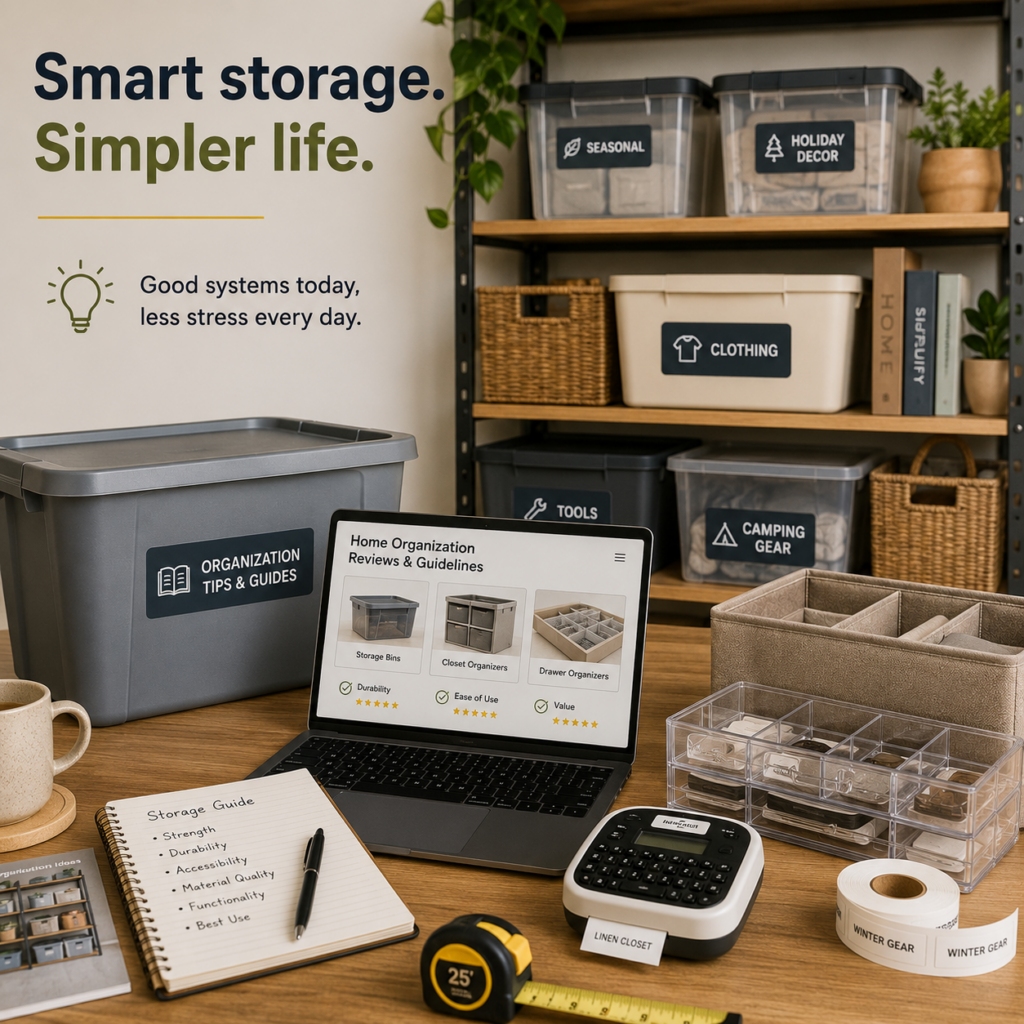
Why Product Reviews Are Hard to Trust
Most online reviews suffer from a few common problems:
- Vague praise with no specifics — “works great!” tells you nothing about durability, ease of use, or value
- Reviews written by people who never actually used the product long-term
- Comparison lists that are really just affiliate rankings, with little honest reasoning behind the order
- A focus on features over actual day-to-day usefulness
Our approach is to focus on real use cases: not just what a product claims to do, but how it performs when you’re tired, busy, and just trying to find your keys or a specific storage bin at 7am on a Monday.
How We Approach Buying Guides
When comparing organizing products, a few criteria consistently matter more than flashy features:
Durability
Does it hold up to daily handling, temperature changes (in a garage or attic), and general wear? A product that looks great on day one but falls apart in a month isn’t actually saving you time or money.
Ease of Use
The best organizing tool is the one you’ll actually use consistently. If a system requires too many steps, too much setup, or too much ongoing maintenance, it tends to get abandoned — no matter how well-designed it is on paper.
Value for the Problem It Solves
Price matters, but the more useful question is whether a product solves a real, recurring problem for you specifically. A premium labeling system might be overkill for a small closet, but genuinely worth it for a garage full of tools or a small business tracking shared equipment.
Scalability
Does the system still work if your needs grow? A method that’s fine for ten items can fall apart completely at a hundred — worth considering before you commit to a system.
Categories We Cover
Storage Containers and Bins
Comparisons of bin materials, sizes, and stacking systems — including which types genuinely hold up in garages, attics, and basements versus which ones look sturdy but aren’t.
Labeling Systems
From basic sticker labels to printed label makers to QR-based digital labels, we look at what each approach is actually good for, and where it starts to fall short as your organizing needs get more complex.
Inventory and Tracking Apps
A breakdown of apps and tools people use to track belongings, equipment, or shared assets — what they do well, what they require in terms of setup time, and who they’re realistically a good fit for.
Moving and Packing Supplies
Reviews of boxes, packing materials, and labeling approaches specifically for moves, where durability and clarity matter more than almost anywhere else.
How to Use This Section
If you’re not sure where to start, a good approach is to think about your specific pain point first:
“I need to track shared equipment for work or a team” → our inventory and tracking app comparisons cover this directly
“I keep losing track of where things are” → start with our labeling and tracking comparisons
“My storage space feels chaotic no matter what I do” → check our storage bin and container guides
“I’m about to move and don’t want another disaster” → our moving and packing supply reviews are the place to start
A Note on What We Recommend
Across the comparisons in this section, one pattern comes up often: products that combine physical labeling with a digital record tend to outperform either approach alone. A sticker tells you what something was labeled as, but it can’t update itself when the contents change or when an item moves locations. That’s the gap solutions like Elephant Trax are built to close — a QR tag on the item links to a record you can update anytime, so the label and the actual information stay in sync, whether you’re organizing a garage, packing for a move, or tracking equipment across a team.
Whatever you’re comparing, our goal in this section is the same: give you enough real detail to make a confident decision, without the fluff.