Storage Solutions
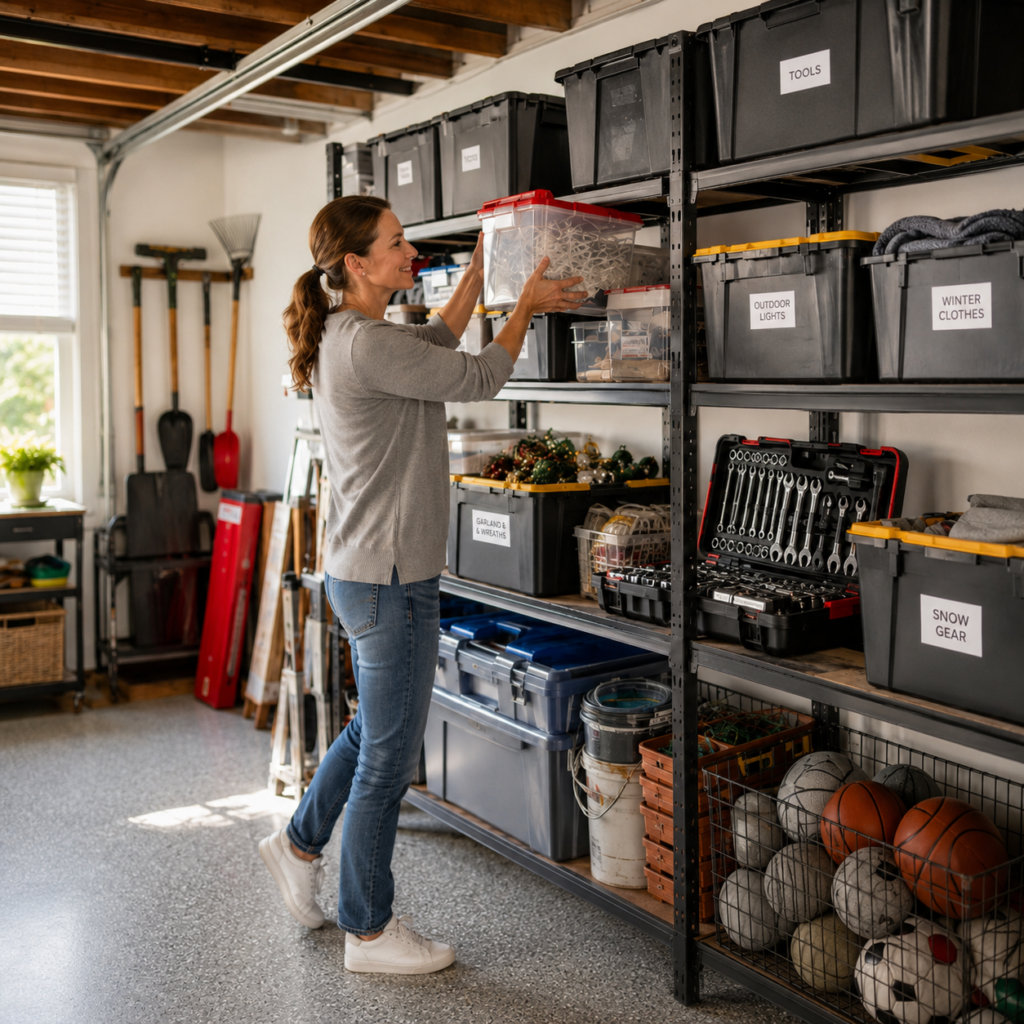
There’s a particular kind of frustration that comes from knowing you own something and still not being able to find it. Maybe it’s the string lights you bought last December, or the good ratchet set that “someone” borrowed six months ago, or a box of winter clothes buried behind three other boxes that all look the same. Storage isn’t just about having enough space — it’s about being able to trust your own system when you actually need something from it.
This page covers practical, real-world approaches to storing your belongings, from choosing the right containers to setting up a rotation that keeps seasonal items easy to reach exactly when you need them.
Why Most Storage Systems Quietly Fail
Storage problems rarely happen all at once. They build up slowly — a bin gets shoved in without a label, a shelf gets reorganized “just this once” and never labeled again, a garage corner becomes a catch-all for things nobody wants to deal with. Six months later, nobody remembers what’s actually in half the containers.
The most common reasons storage systems break down:
- No consistent labeling — bins get filled but never marked, so contents are a guessing game
- Mixed categories in one container — holiday decor next to camping gear next to old cables
- Storage that isn’t zoned — items placed wherever there’s room, instead of grouped by how often they’re used
- No plan for seasonal rotation — winter and summer items compete for the same easy-to-reach space year-round
Fixing these issues doesn’t require buying more storage. It usually means being more deliberate about the storage you already have.
Choosing the Right Storage Bins
Not all bins are created equal, and picking the wrong type is one of the most common storage mistakes.
Clear vs. Opaque Bins
Clear plastic bins let you see contents at a glance, which is genuinely useful for anything you’ll open more than once a year — think craft supplies, tools, or kids’ toys. Opaque bins work better for things you want out of sight, like off-season clothing or sentimental items you’re storing but not actively using.
Size Matters More Than You’d Think
Oversized bins seem efficient, but a large bin packed full becomes heavy and awkward — and once it’s buried under other things, you’re unlikely to dig it out for a single item. Medium-sized bins that one person can lift and move easily tend to get used more consistently than giant totes that end up permanently wedged in a corner.
Stackable Design Isn’t Optional
If bins don’t stack securely, shelving space gets wasted and stacks become unstable over time. Uniform bin sizes within a storage zone make a noticeably bigger difference than most people expect.
Organizing Seasonal Items Without the Yearly Scramble
Seasonal storage — holiday decorations, winter coats, camping gear, patio furniture cushions — is one of the biggest sources of storage stress because it’s used intensely for a short window and then forgotten for months.
A Simple Seasonal Rotation System
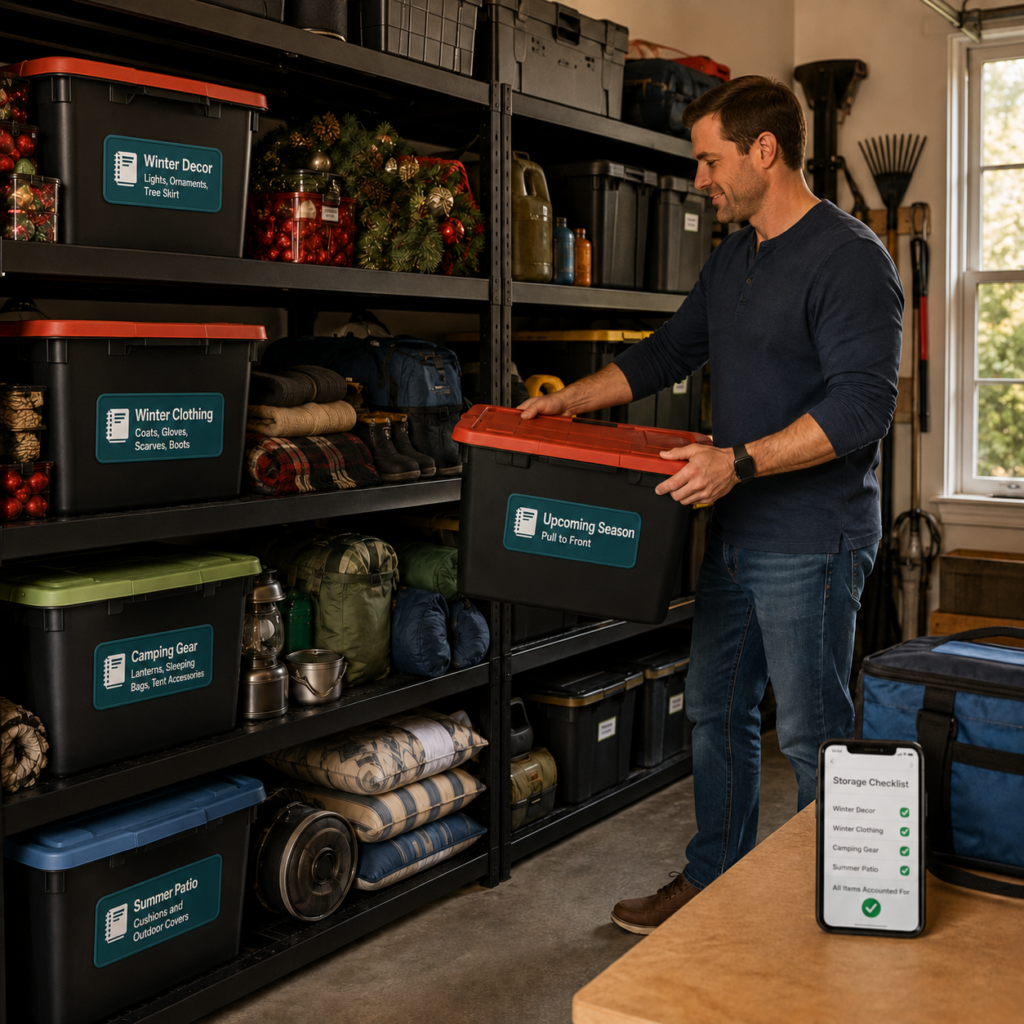
- Group by season, not by room. All winter items together, all summer items together, regardless of which room they’ll eventually live in.
- Store the “in-season, soon” items closer to the front. As one season ends, the next season’s box moves to the most accessible spot.
- Label with more than a category name. “Winter Decor” is less useful than “Winter Decor — Lights, Ornaments, Tree Skirt.” The more specific the label, the less time spent opening boxes just to check.
- Do a two-minute inventory check when you pack items away. It only takes a moment, but it saves you from buying duplicates of things you already own next year.
Garage, Attic, and Basement Considerations
These spaces are popular for storage because they’re out of the way — but that’s exactly why organization matters more there, not less.
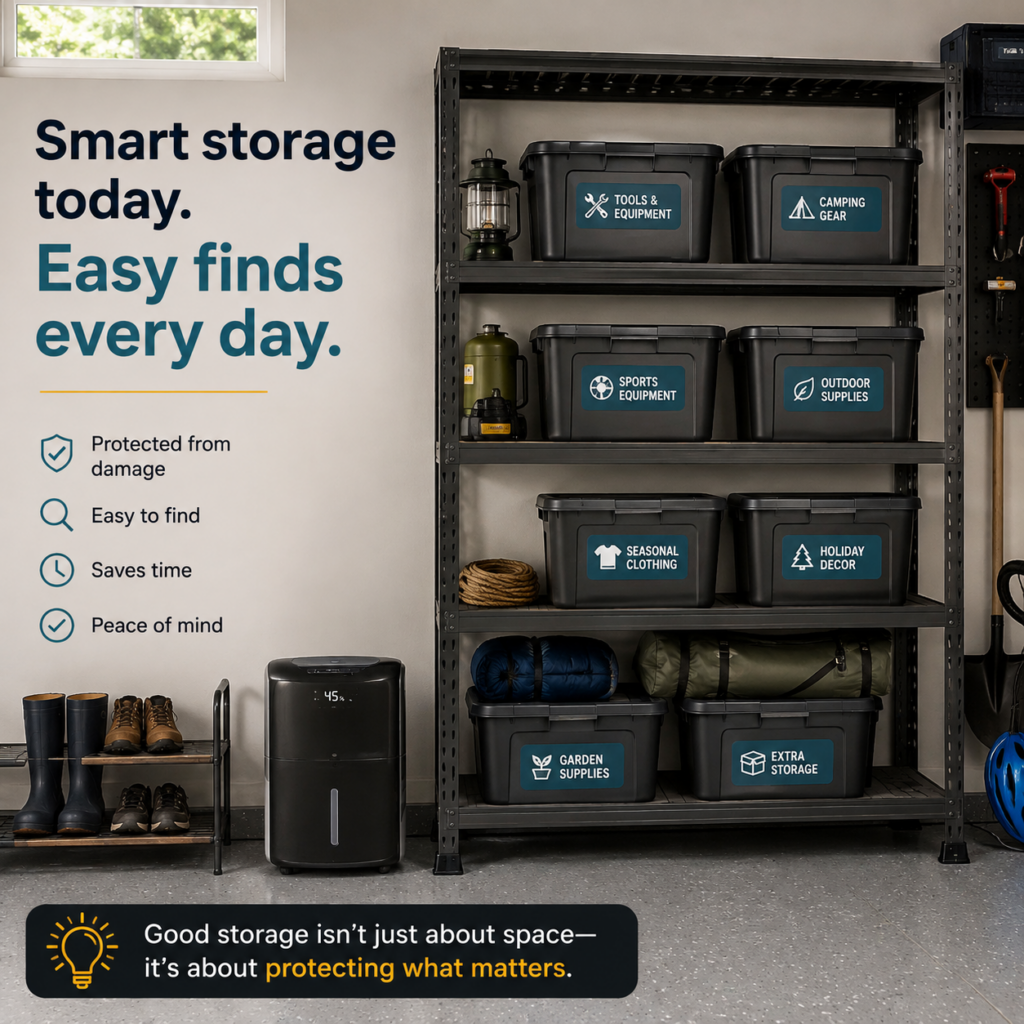
- Garages are prone to humidity and temperature swings, so avoid storing anything sensitive (photos, electronics, certain fabrics) directly on the floor or against exterior walls.
- Attics can get extremely hot in summer, which makes them a poor choice for candles, certain plastics, or anything that could warp or melt.
- Basements risk moisture and flooding, so raised shelving and sealed bins matter more here than almost anywhere else in the house.
Matching the storage location to what’s actually being stored — not just what fits — prevents a lot of avoidable damage.
Small Space Storage Ideas
Not everyone has a garage or an attic to work with. For apartments or smaller homes, vertical space usually goes underused: wall-mounted shelving, over-the-door organizers, and under-bed storage bins can free up a surprising amount of room. Multi-purpose furniture — ottomans with hidden storage, beds with built-in drawers — also helps without requiring a dedicated storage room.
Keeping Track of What’s in Storage
Even with a well-organized system, the biggest long-term challenge is memory. Bins get put away, seasons pass, and by the time you need something again, you’re often relying on guesswork about which container it’s in. A physical label helps, but it only tells you what was true the day you wrote it — it doesn’t update if the contents change.
This is where a lot of people start looking for something more reliable than a sticky note. Solutions like Elephant Trax use a scannable QR tag on each bin or storage area, linked to a digital record you can update anytime — so instead of guessing what’s inside a box from six months ago, you can check its contents from your phone before you even open it.
Whatever system you land on, the goal is the same: storage that works for you, not storage you have to work around.