Moving and Packing
Moving is one of those life events everyone agrees is stressful, yet somehow still catches people off guard every time. It’s not usually the big things that cause problems — most people remember to book a truck and change their address. It’s the smaller details: the box you swore you’d label but didn’t, the “miscellaneous” box that turns into three miscellaneous boxes, the morning of move-in day when you can’t find a single pair of scissors in a house full of taped-up cardboard.
This page covers practical ways to plan, pack, and settle into a new place without losing your mind — or your favorite mug — somewhere along the way.
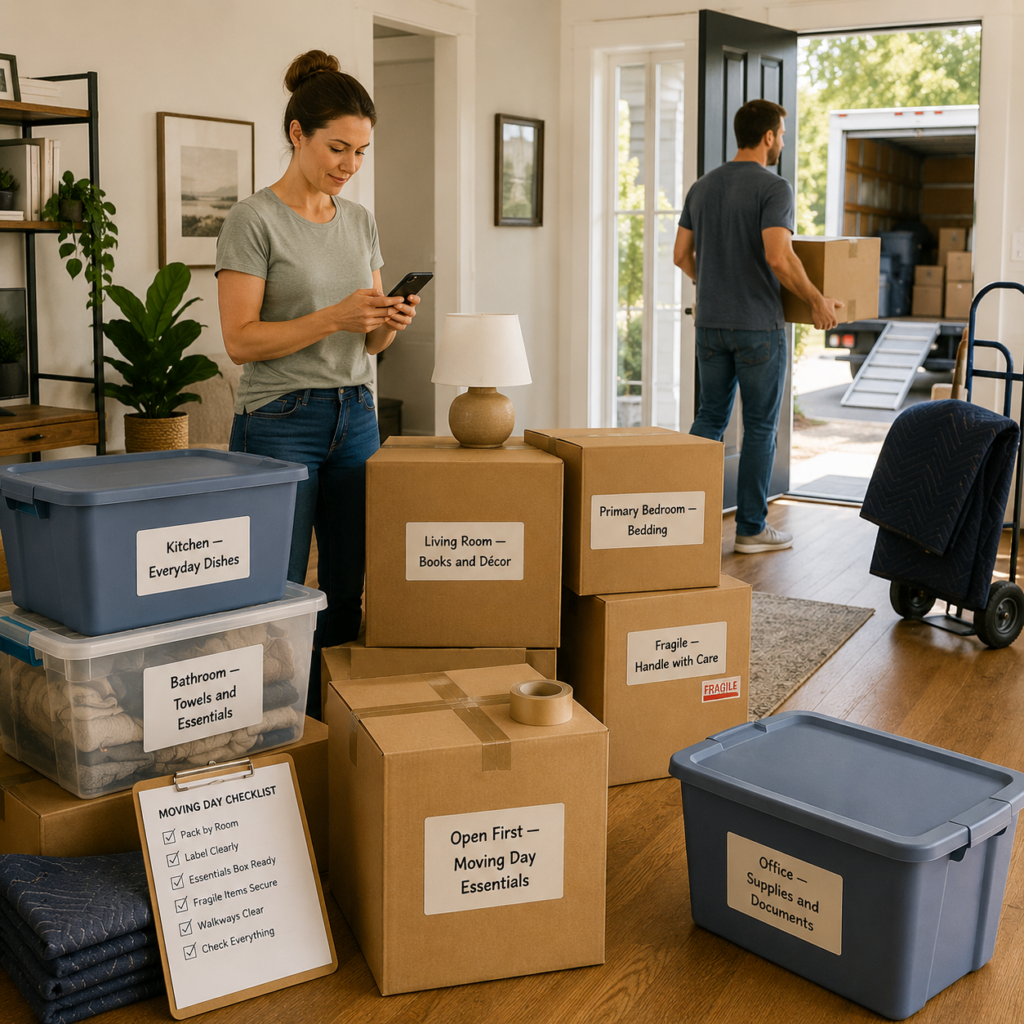
Why Moves Go Wrong (Even When You Plan Ahead)
Most moving stress doesn’t come from lack of effort. It comes from a few predictable mistakes that are easy to make and easy to avoid once you know what to watch for:
- Packing too close to moving day, leaving no buffer for the inevitable delays
- Vague labeling, like writing “kitchen” on ten different boxes with no idea what’s actually inside each one
- No system for essentials, so the first night in a new place turns into a scavenger hunt for a phone charger or toothbrush
- Underestimating how long packing actually takes, especially for closets, garages, and storage areas that quietly accumulate more than expected
Knowing these patterns ahead of time makes it much easier to build a plan that actually holds up.
Building a Moving Timeline That Works
A good move isn’t packed in a single frantic weekend — it’s spread out in stages.
6–8 Weeks Before
Start with things you don’t use often: off-season clothing, decorations, books, and storage items. This is also the best time to declutter, since it’s far easier to sort through belongings before they’re all boxed up.
3–4 Weeks Before
Begin packing everyday rooms one at a time — start with guest rooms or spaces you use less, and work toward the kitchen and bedroom last.
1–2 Weeks Before
Pack most of what’s left, but set aside a clearly marked “essentials” box (more on that below) that stays out of the truck until the very end.
Moving Week
Finish packing, confirm logistics with movers or your rental truck, and do a final walkthrough to check closets, cabinets, and easy-to-forget spots like the garage or attic.
How to Pack Boxes So You Actually Know What’s Inside
The single biggest complaint people have after a move isn’t the packing — it’s the unpacking. Boxes get stacked, labels fade or get covered, and what should take a day turns into weeks of “I’ll deal with that box eventually.”
A few habits make a real difference:
- Photograph shelves or cabinets before disassembling them, especially electronics setups or anything with a specific arrangement you’ll want to recreate.
- Label by room and contents. “Kitchen” is vague. “Kitchen — Pots, Pans, Lids” tells you exactly what to expect.
- Pack heavier items in smaller boxes. Oversized boxes packed with books or dishware become genuinely hard to lift safely.
- Keep a “first night” box separate from everything else. Toiletries, chargers, a change of clothes, basic tools, and any medication should never end up buried in the truck.

Packing Room by Room
Kitchen
Wrap breakables individually, pack plates vertically (like records) rather than stacked flat, and keep a separate box of items you’ll need immediately — a kettle, a few utensils, basic seasoning.
Bedroom
Use wardrobe boxes or garbage bags with a hole cut for hangers to move clothing without folding everything. Pack bedding last so it’s available for the first night.
Bathroom
Pack toiletries and medications in a clearly marked box that travels with you personally, rather than in the moving truck, especially for anything time-sensitive.
Garage and Storage Areas
These tend to be the most underestimated part of a move. Tools, sports equipment, and half-used cans of paint or chemicals often require separate handling — some items can’t legally travel in a moving truck, so it’s worth checking ahead of time.
Moving With Kids or Pets
Moves are disorienting for children and pets, who don’t have the context adults do to understand what’s happening. Keeping a few familiar items — a favorite toy, a specific blanket, a pet’s regular food bowl — easily accessible (not buried in a box) helps smooth the transition on moving day itself.
Settling In: The First Week After Moving
- Unpacking doesn’t need to happen all at once. Prioritize:
- Everything else at a pace that doesn’t add stress on top of an already busy transition
- Bed and bathroom essentials first, so you can function normally
- Kitchen basics second, so you’re not relying on takeout for two weeks
Keeping Track of What’s Packed Where
Even with the best labeling system, it’s easy to lose track of exactly what’s in which box once you’ve got twenty or thirty of them stacked in a new place. A written label tells you what was packed — but it doesn’t help once boxes get moved around, restacked, or opened and partially unpacked.
Some people solve this with a simple spreadsheet noting box numbers and contents. Others use tools like Elephant Trax, which link a scannable QR tag on each box to a digital record you can check and update from your phone — so instead of opening five boxes to find one item, you can see exactly what’s inside before you start unpacking.
However you track it, the goal is the same: a move that ends with everything found quickly, not a house full of boxes you’re still sorting through months later.