Storage Tips

Good storage doesn’t usually come from one big overhaul — it comes from a handful of small habits done consistently. This page is a quick-reference collection of practical storage tips you can apply right away, whether you’re tackling a single shelf or rethinking how a whole room is organized.

Everyday Storage Habits Worth Building

Store items near where you use them. A tool used only in the garage shouldn’t live in a hallway closet — proximity to use is one of the simplest ways to keep things from getting misplaced.

Give every item a “home.” If something doesn’t have a designated spot, it will end up wherever is convenient in the moment, which is exactly how clutter starts.

Put things back immediately, not “later.” The gap between using an item and returning it is where most disorganization creeps in.

Reassess storage every few months. Needs change — what worked for a space six months ago might not fit how you’re using it now.
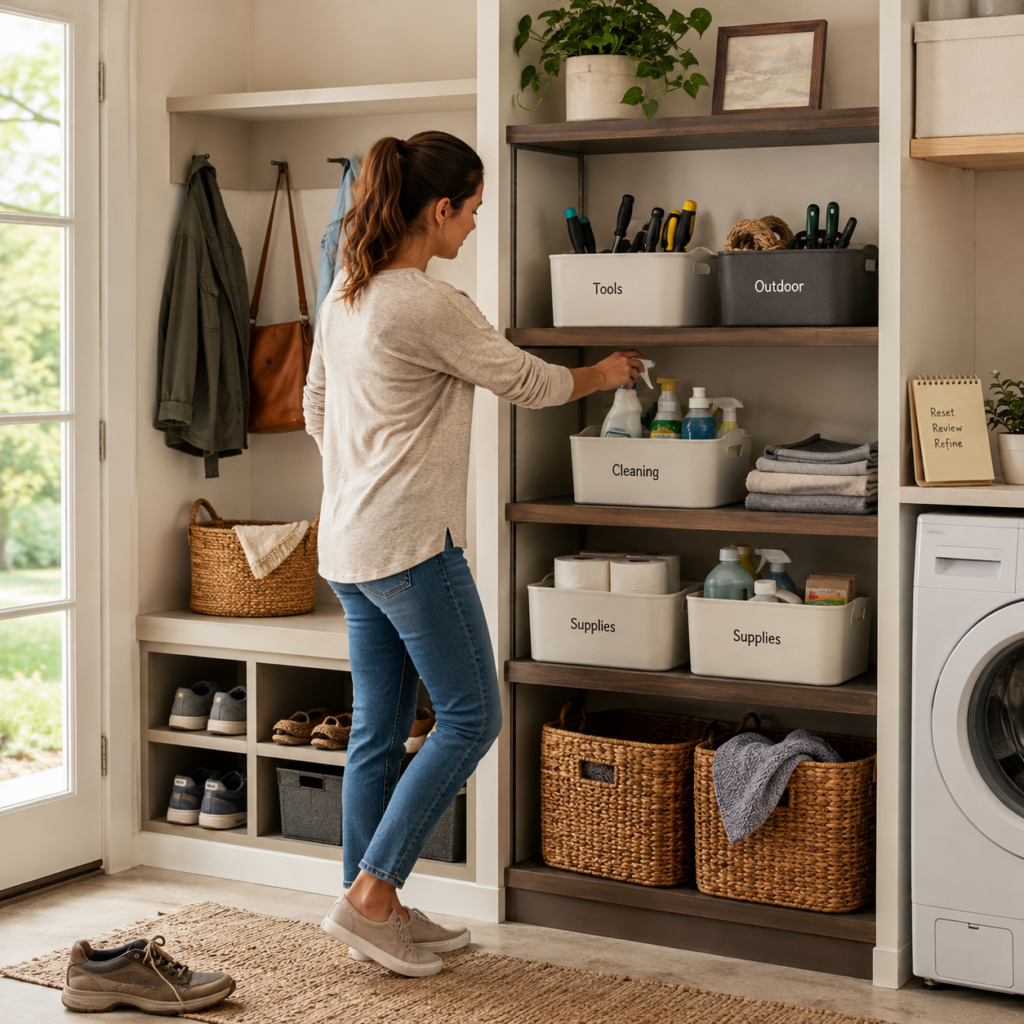
everyday storage habits

Quick Tips for Bins and Containers

tips for bins and containers

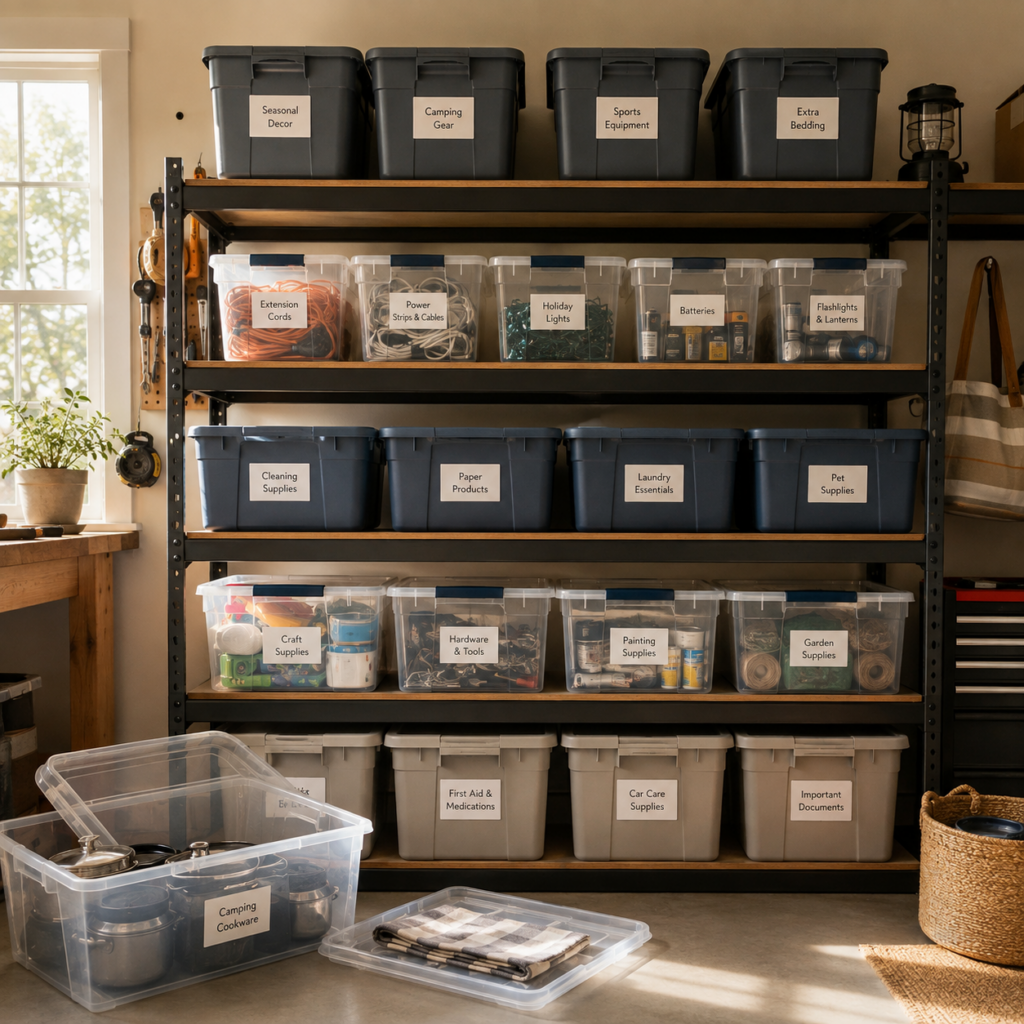
Match container size to how often you’ll access it. Frequently used items belong in bins you can lift and open easily — not oversized totes buried under other things.

Use uniform bin sizes on the same shelf. Mismatched sizes waste vertical space and make stacks unstable.

Choose clear bins for anything you’ll open more than a few times a year. Being able to see contents at a glance saves far more time than it seems like it would.

Leave a little extra room in each bin. A completely packed container is harder to search through and more likely to get damaged when forced shut.

Group by category, not convenience. Tossing random items into whatever bin has space defeats the purpose of using bins at all.

Shelving and Vertical Space Tips

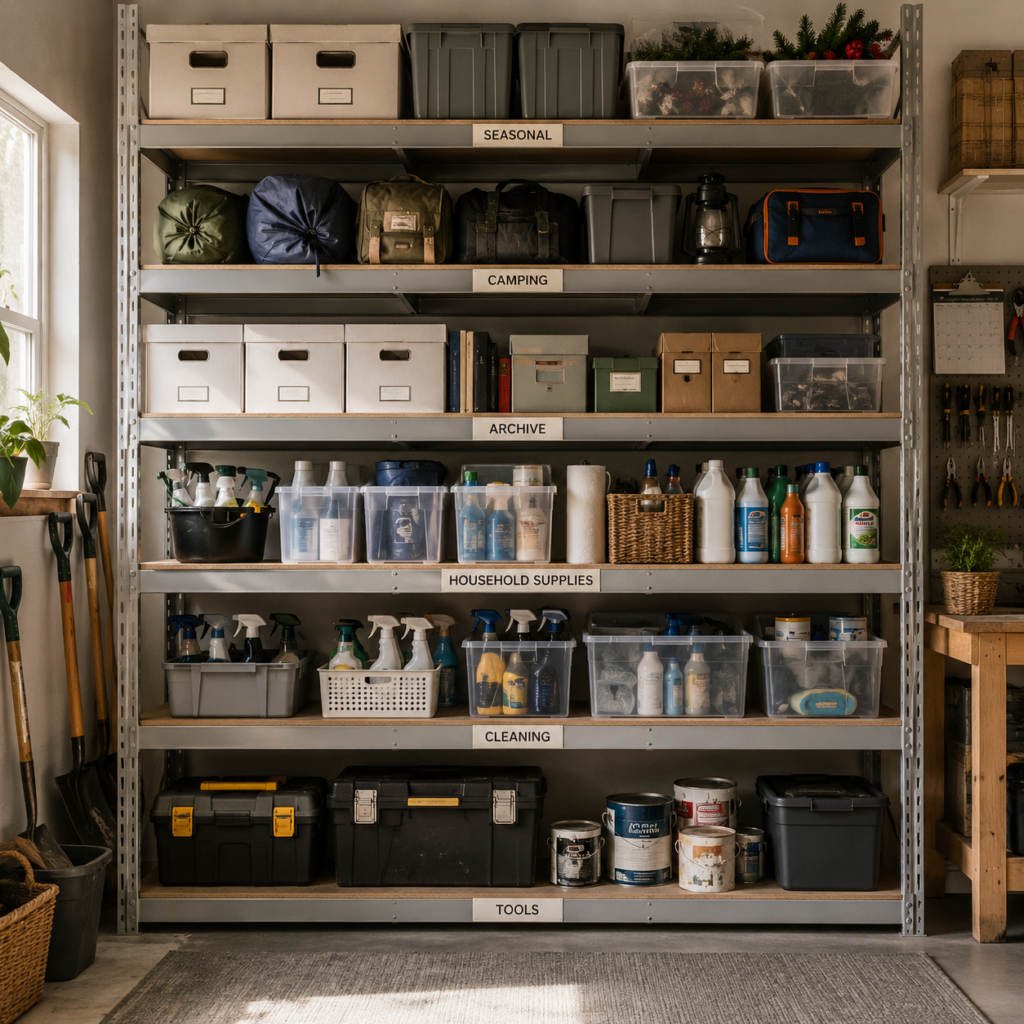
Store heavier items lower, lighter items higher. This isn’t just about safety — it also makes frequently used heavy items easier to access without lifting from awkward heights.

Use adjustable shelving where possible. Fixed shelf heights often waste space above shorter items; adjustable shelves let storage flex as your needs change.

Don’t ignore the space above eye level. Rarely used seasonal or archival items are a good fit for high shelving that’s harder to reach.

Label the front of every shelf, not just bins. A quick glance at a shelf label saves time compared to pulling out multiple bins to check.

items are stored into shelves
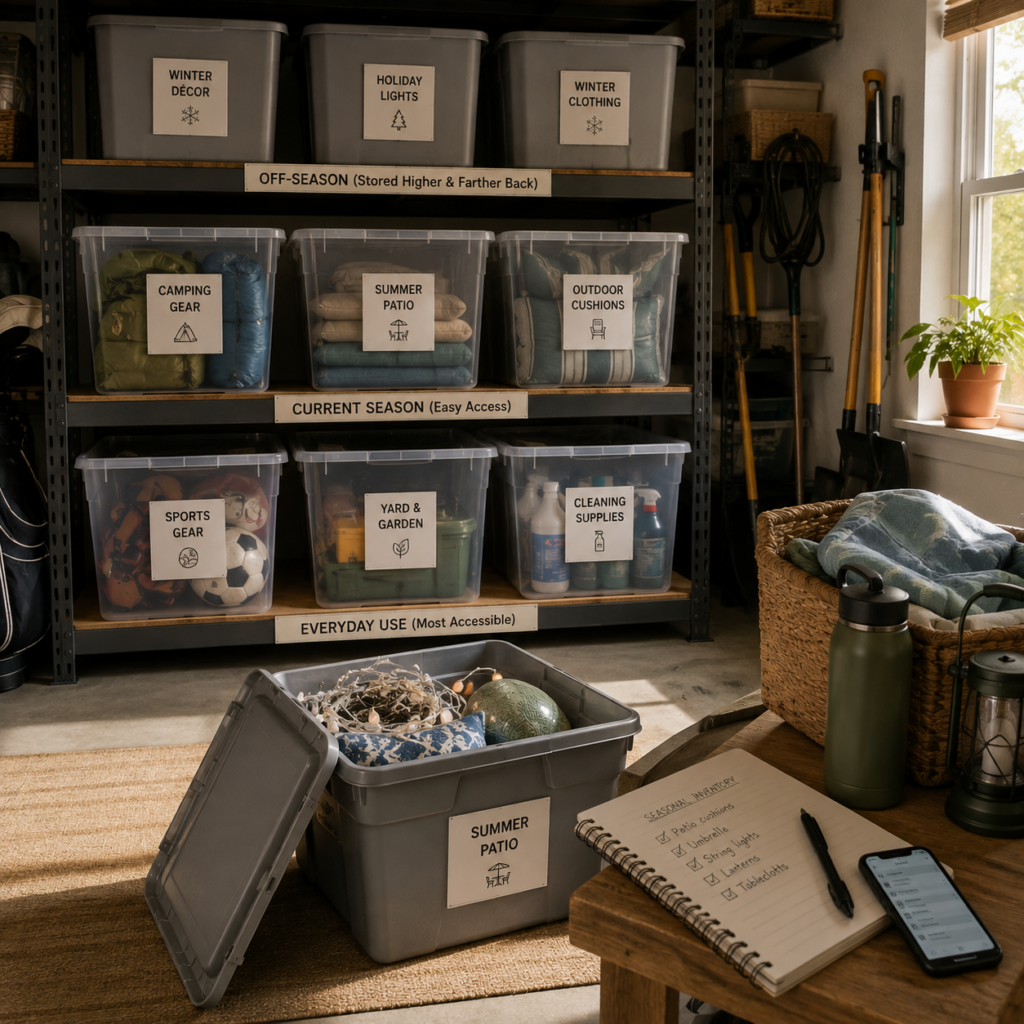
storage solutions for seasonal items

Seasonal Storage Quick Tips

Store off-season items furthest from daily-use zones. Free up your most convenient storage space for what’s actually relevant right now.

Do a five-minute check before boxing seasonal items away. Confirm everything works, fits, or is still wanted — it’s much easier to deal with now than to rediscover a problem next year.

Rotate storage twice a year, not once. A simple swap at the start of each major season keeps things from piling up in the meantime.

Keep a short list of what’s in seasonal storage. Even a basic note prevents buying duplicates of things you already own.

Garage, Attic, and Basement Quick Tips

  • Keep a clear walking path. Storage that blocks movement tends to get avoided entirely, which leads to items being dumped near the entrance instead of put away properly.
  • Elevate anything stored directly on a basement floor. Even occasional dampness can damage boxes and their contents over time.
  • Avoid storing temperature-sensitive items in attics or garages. Photos, electronics, candles, and certain plastics don’t hold up well through seasonal temperature swings.
  • Use wall-mounted storage for tools and equipment. Pegboards and wall hooks free up floor space and keep frequently used items visible.

Small Space Storage Tips

  • Think vertically before you think about buying more furniture. Wall shelves and over-door organizers often solve a space problem without needing new furniture at all.
  • Use under-bed storage for seasonal or rarely used items. It’s some of the most overlooked space in a home.
  • Choose furniture that stores as well as it functions. Ottomans, benches, and beds with built-in storage do double duty in smaller rooms.
  • Resist the urge to fill every gap. Overpacking small spaces tends to make them feel — and function — worse, not better.